
White chocolate is creamy, sweet, and wonderfully versatile, making it a favorite ingredient for everything from homemade candy to cakes, cookies, sauces, and festive treats. Fortunately, learning how to make white chocolate recipes at home is easier than it may seem, especially when you understand how the ingredients work together. Moreover, homemade white chocolate gives you the freedom to adjust the sweetness, add your favorite flavors, and create treats that look as good as they taste. Whether you are preparing a simple dessert for your family or experimenting with a new homemade candy idea, this guide will walk you through the process step by step.
What Is White Chocolate?
White chocolate is different from traditional milk or dark chocolate because it does not contain cocoa solids. Instead, it is primarily made with cocoa butter, powdered sugar, and milk powder.
As a result, white chocolate has a lighter color and a naturally sweet, creamy flavor. Furthermore, vanilla is often added to give it a pleasant aroma and richer taste.
Unlike regular chocolate, white chocolate can be sensitive to heat. Therefore, gentle melting and careful temperature control are important when making it at home.
Ingredients for Homemade White Chocolate
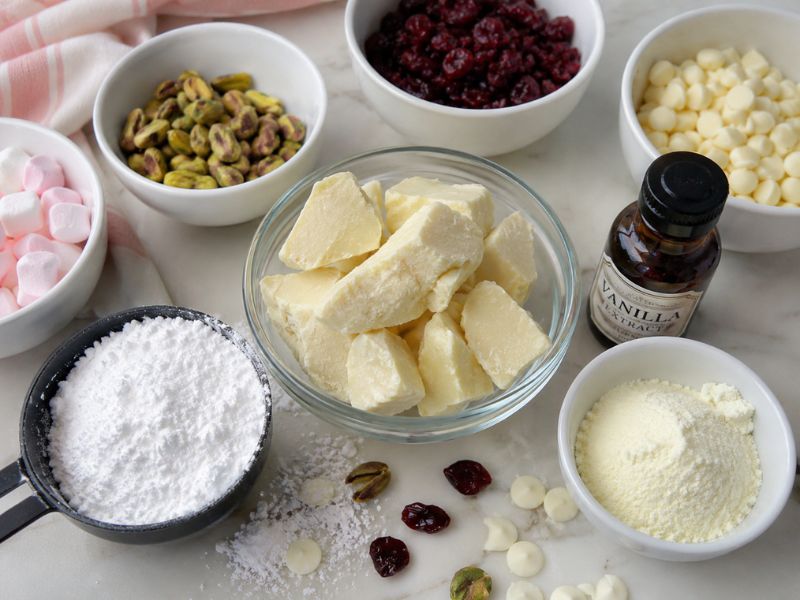
Before learning how to make white chocolate recipes, gather all your ingredients and equipment. Fortunately, the ingredient list is quite short.
Cocoa Butter
Cocoa butter forms the creamy base of homemade white chocolate. It gives the finished chocolate its smooth texture and helps it become firm when chilled.
For the best results, use food-grade cocoa butter rather than cosmetic cocoa butter.
Powdered Sugar
Powdered sugar provides sweetness and blends more easily than granulated sugar. Consequently, it helps create a smoother texture without leaving large sugar crystals in the chocolate.
Milk Powder
Milk powder adds creaminess and gives white chocolate its familiar milky flavor. For a richer result, use finely powdered whole milk powder.
Vanilla
A small amount of vanilla extract or vanilla powder adds depth to the flavor. However, liquid ingredients should be used sparingly because too much moisture can cause chocolate to become thick or grainy.
Optional Add-Ins
You can also customize your homemade chocolate with ingredients such as:
- Chopped nuts
- Dried cranberries
- Crushed cookies
- Coconut
- Freeze-dried fruit
- Mini marshmallows
- Citrus zest
- Cinnamon
For instance, dried cranberries and pistachios create a colorful combination that works especially well for holidays.
How to Make White Chocolate Recipes at Home
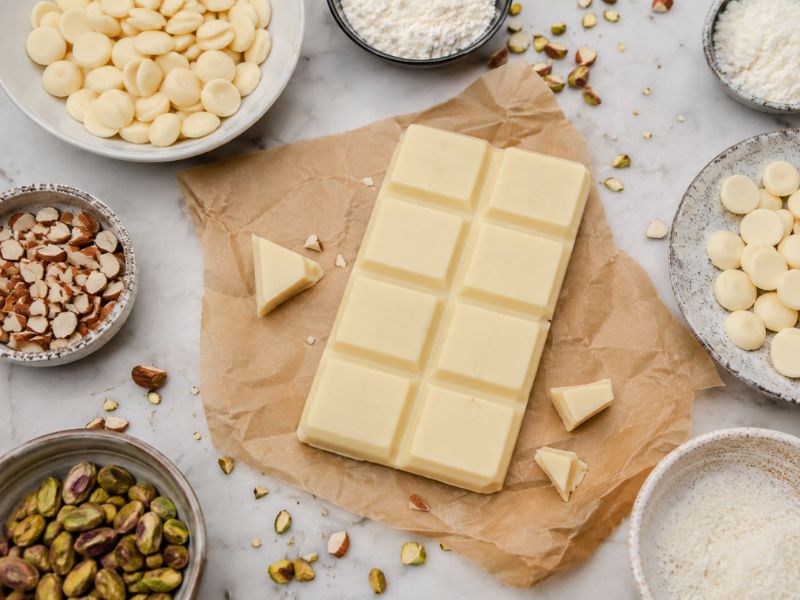
Now that your ingredients are ready, it is time to make the chocolate. The process is simple, but each step matters.
Step 1: Prepare Your Mold
First, choose a clean, completely dry silicone chocolate mold or small candy mold. Alternatively, you can line a small baking pan with parchment paper if you want to make a chocolate bark.
Make sure there is no water inside the mold. Even a small amount of moisture can affect the texture of melted chocolate.
Step 2: Melt the Cocoa Butter
Place the cocoa butter in a heatproof bowl. Next, set the bowl over a saucepan containing a small amount of gently simmering water.
Stir the cocoa butter occasionally as it melts. Meanwhile, keep the heat low because excessive heat can negatively affect the final texture.
Once the cocoa butter has completely melted, remove it from the heat.
Step 3: Add the Dry Ingredients
Gradually add the powdered sugar and milk powder to the melted cocoa butter. Stir continuously so that the ingredients blend evenly.
For an especially smooth result, sift the powdered sugar and milk powder before adding them. Consequently, you will have fewer lumps and a more polished texture.
Step 4: Add Vanilla
Now add a small amount of vanilla. Stir thoroughly until the mixture looks smooth and evenly combined.
At this stage, avoid adding water-based flavorings because they can cause the chocolate mixture to seize. If you enjoy making creamy homemade desserts, you can also try this chocolate ice cream recipe for another delicious treat.
Step 5: Pour Into the Mold
Carefully pour the mixture into your prepared mold. Gently tap the mold against the counter to release any trapped air bubbles.
Furthermore, if you are making bark, simply spread the chocolate into an even layer on parchment paper.
Step 6: Add Your Favorite Toppings
While the chocolate is still soft, sprinkle your chosen toppings over the surface.
For example, you can add chopped almonds, pistachios, coconut, dried fruit, or crushed cookies. Press larger toppings gently into the chocolate so they stay in place after it sets.
Step 7: Chill Until Firm
Place the mold or tray in the refrigerator until the chocolate becomes firm. This usually takes around 30 to 60 minutes, depending on the thickness.
Once completely set, carefully remove the chocolate from the mold. Finally, store it in an airtight container away from heat and moisture.
Tips for Making Smooth White Chocolate
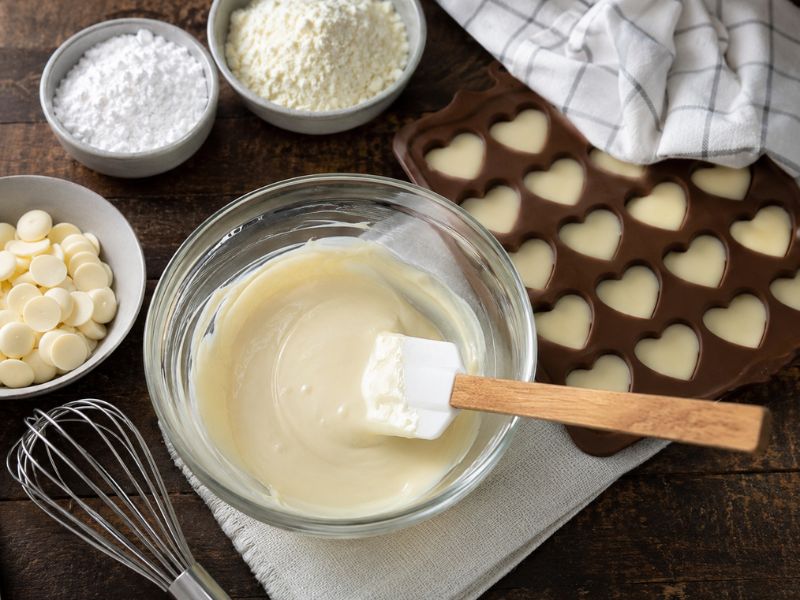
Making homemade chocolate is straightforward; however, a few small details can make a major difference.
Use Finely Ground Ingredients
Powdered sugar and milk powder should be as fine as possible. Otherwise, the finished chocolate may feel slightly gritty.
Keep Everything Dry
Water is one of the biggest problems when working with chocolate. Therefore, make sure your bowls, utensils, molds, and hands are dry before starting.
Avoid High Heat
High temperatures can damage the delicate ingredients and may cause the chocolate to develop an unpleasant texture. Instead, use gentle heat and stir patiently.
Strain the Mixture if Needed
If your mixture contains small lumps, you can pass it through a fine sieve before pouring it into the mold. This extra step can help create a smoother finish.
Let It Set Properly
Do not remove the chocolate too early. Although the outside may appear firm, the center can still be soft. Give it enough time to become completely solid.
Easy White Chocolate Recipe Variations
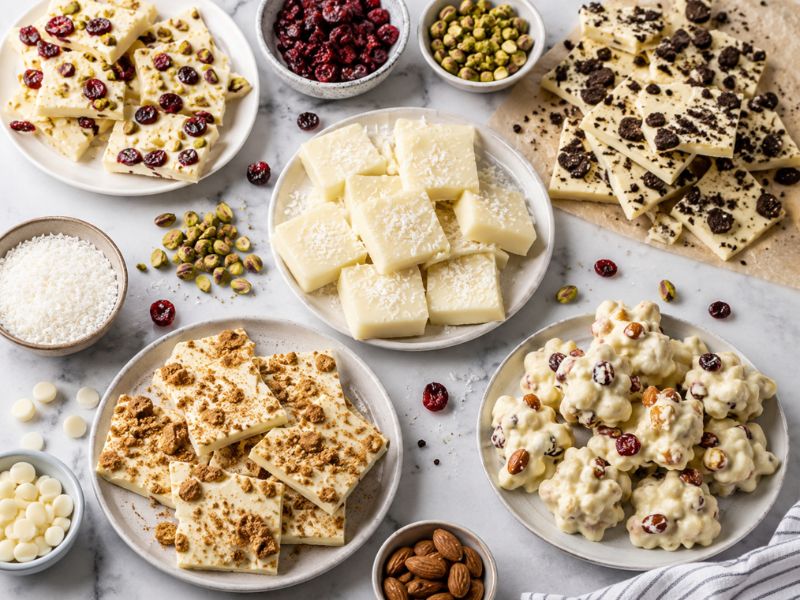
Once you know the basic method, you can turn it into several delicious desserts and snacks.
White Chocolate Bark
White chocolate bark is one of the easiest variations. Simply spread melted white chocolate onto parchment paper and add toppings such as nuts, dried fruit, coconut, or crushed cookies.
Afterward, chill it until firm and break it into irregular pieces. Because it requires very little preparation, it is an excellent choice for beginners.
White Chocolate and Cranberry Bark
For a festive version, combine white chocolate with dried cranberries and chopped pistachios. The creamy chocolate contrasts beautifully with the fruity cranberries and crunchy nuts.
Moreover, this combination makes an attractive homemade gift during holidays and special occasions.
White Chocolate Cookie Pieces
Another simple idea is to add crushed cookies to melted white chocolate. Spread the mixture into a lined tray, chill it, and then cut or break it into pieces.
Consequently, you get a crunchy, creamy dessert with very little effort.
White Chocolate Coconut Squares
For coconut lovers, stir shredded coconut into the chocolate mixture before pouring it into a mold. Add a little extra coconut on top for decoration.
This version has a tropical flavor and pairs particularly well with coffee or tea.
White Chocolate Fruit Clusters
You can also create small fruit clusters by mixing melted white chocolate with dried fruits and nuts. Spoon the mixture onto parchment paper and refrigerate until firm.
As a result, you will have bite-sized treats that are easy to serve and share.
How to Use Homemade White Chocolate in Desserts
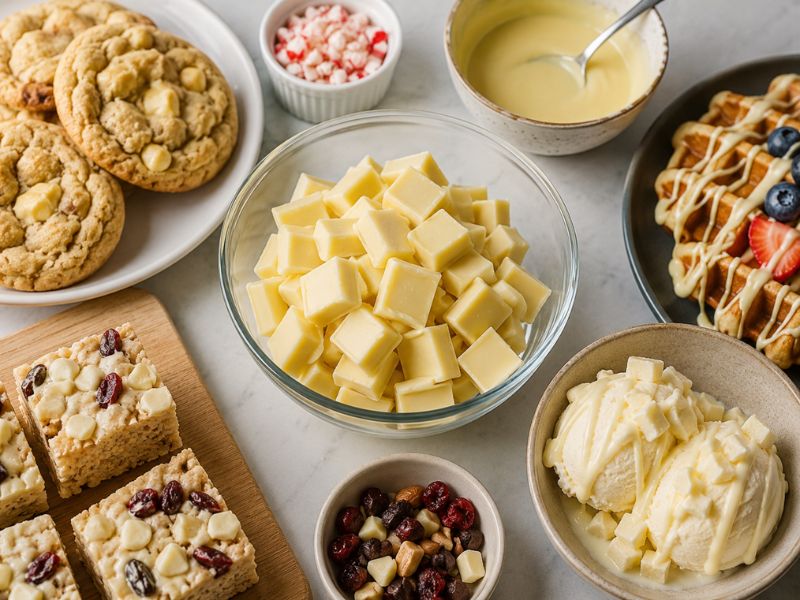
Homemade white chocolate is not limited to candy. In fact, it can be used in many different desserts.
You can chop it into pieces and mix it into cookie dough. Similarly, you can melt it gently and drizzle it over brownies, pancakes, waffles, or cupcakes.
Furthermore, white chocolate pieces can be added to homemade trail mixes or dessert bars. You can even use small pieces as a topping for ice cream. If you enjoy comforting dishes with a creamy texture, you may also like this guide to creamy polenta, a versatile dish that works well as a side or main meal.
For special occasions, try adding colorful sprinkles, crushed peppermint, or dried fruit. Therefore, one simple chocolate mixture can become several completely different desserts.
Common Mistakes to Avoid
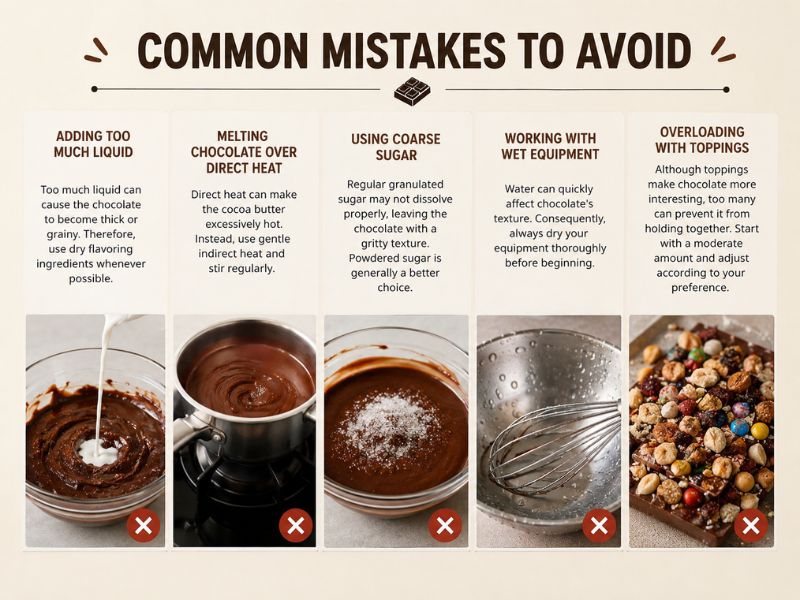
Even though the process is easy, beginners sometimes run into a few common problems.
Adding Too Much Liquid
Too much liquid can cause the chocolate to become thick or grainy. Therefore, use dry flavoring ingredients whenever possible.
Melting Chocolate Over Direct Heat
Direct heat can make the cocoa butter excessively hot. Instead, use gentle indirect heat and stir regularly.
Using Coarse Sugar
Regular granulated sugar may not dissolve properly, leaving the chocolate with a gritty texture. Powdered sugar is generally a better choice.
Working With Wet Equipment
Water can quickly affect chocolate’s texture. Consequently, always dry your equipment thoroughly before beginning.
Overloading With Toppings
Although toppings make chocolate more interesting, too many can prevent it from holding together. Start with a moderate amount and adjust according to your preference.
How to Store Homemade White Chocolate
Proper storage helps preserve the flavor and texture of homemade chocolate. First, place the finished chocolate in an airtight container.
Then, keep it in a cool, dry location away from direct sunlight and strong odors. If your kitchen is particularly warm, refrigeration can help prevent melting.
However, when refrigerated, allow the chocolate to sit at room temperature briefly before serving. This can improve its texture and flavor.
Can You Make White Chocolate Without Cocoa Butter?
Traditional white chocolate relies on cocoa butter for its characteristic texture and flavor. Therefore, replacing it completely can produce a result that tastes and behaves differently.
If you cannot find cocoa butter, you can experiment with alternative recipes using other fats, but the final product may be softer and less chocolate-like.
For an authentic homemade white chocolate experience, cocoa butter remains the best option.
How to Make White Chocolate Recipes for Gifts
Homemade chocolate makes a thoughtful gift because it can be customized for almost any occasion.
For example, prepare white chocolate bark with dried cranberries and pistachios for a festive gift. Alternatively, make small chocolate bars and wrap them individually in food-safe packaging.
Moreover, you can place different varieties in a decorative box and label each flavor. This simple presentation makes homemade treats feel extra special.
Frequently Asked Questions
1. What are the main ingredients in homemade white chocolate?
Cocoa butter, powdered sugar, milk powder, and vanilla are the basic ingredients.
2. Why does homemade white chocolate become grainy?
A grainy texture usually results from coarse ingredients, overheating, or improper mixing.
3. Can I add nuts and dried fruit to white chocolate?
Yes, nuts and dried fruit are excellent additions and can be mixed in or sprinkled on top.
4. How long does homemade white chocolate take to set?
It generally takes about 30 to 60 minutes in the refrigerator, depending on its thickness.
5. How should homemade white chocolate be stored?
Store it in an airtight container in a cool, dry place away from heat and moisture.
Conclusion
Learning how to make white chocolate recipes at home gives you a simple way to create creamy, customizable treats without complicated equipment or techniques. With cocoa butter, powdered sugar, milk powder, and a little vanilla, you can prepare a smooth base and transform it into bark, candy pieces, fruit clusters, or dessert toppings. Moreover, experimenting with nuts, dried fruit, coconut, and cookies allows you to create flavors that suit your taste. Most importantly, remember to work with gentle heat, keep moisture away from the chocolate, and give each batch enough time to set. Once you master the basic method, you can confidently create plenty of delicious homemade white chocolate treats for everyday snacking or special occasions. With these simple steps, you can enjoy delicious homemade treats using these easy how to make white chocolate recipes.