
If you want to learn how to make ginger syrup recipe at home, you’ll be surprised by how simple this flavorful homemade syrup is to prepare. A small splash can wake up a glass of sparkling water, add warmth to iced tea, or turn an ordinary dessert into something much more interesting. If you have been searching for how to make ginger syrup recipes, the good news is that the process is surprisingly easy. Fresh ginger, sugar, and water are all you need for the basic version. Moreover, you can adjust the sweetness and ginger intensity according to your taste. Once you make a batch yourself, you may find it much more useful than expected because it works in drinks, breakfasts, desserts, sauces, and even fruit dishes.
Why This Homemade Ginger Syrup Recipe Works So Well
Ginger syrup brings two useful qualities together: sweetness and a gentle spicy bite. Regular sugar creates a smooth base, while fresh ginger gives the mixture its distinctive warmth and aroma. Therefore, this how to make ginger syrup recipe gives you an easy base for drinks, desserts, and everyday cooking.
However, the real difference comes from using fresh ginger rather than relying entirely on powdered spice. Fresh root contains bright, aromatic flavors that make the finished syrup taste lively instead of flat. In addition, gentle cooking allows those flavors to move into the sweetened water without making them overly harsh.
The final result should pour easily and taste balanced. Therefore, you do not want the ginger to completely dominate the sweetness.
Ingredients Needed for This Ginger Syrup Recipe
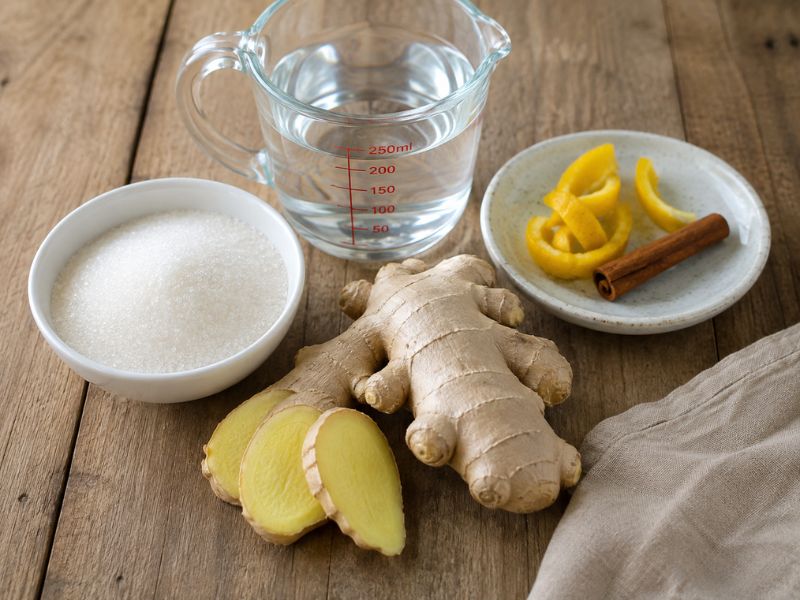
The ingredient list is short, but each item has an important job. Choosing good ingredients will give you a noticeably better result.
Fresh Ginger Root
Choose ginger that feels firm when you press it gently. The skin should look reasonably smooth, and the root should have a fresh, spicy aroma. Avoid pieces that feel soft, look excessively shriveled, or show signs of spoilage.
For a more pronounced flavor, slice the ginger thinly. On the other hand, slightly thicker pieces will give you a softer infusion.
Granulated Sugar
Plain white sugar works especially well because it dissolves cleanly and allows the ginger to remain the main flavor. Nevertheless, brown sugar or cane sugar can be used when you want a deeper taste.
Water
Use fresh drinking water for the syrup. Since water makes up a large portion of the recipe, its quality can affect the final flavor.
Optional Additions
You can keep the recipe completely classic or introduce another flavor. Lemon peel, orange peel, cinnamon, vanilla, and a few whole cloves are all useful options.
| Ingredient | Amount | What It Contributes | Possible Alternative |
| Fresh ginger | 100 g | Warm, spicy flavor | Young ginger |
| White sugar | 200 g | Sweetness and syrup texture | Cane sugar |
| Water | 240 ml | Liquid foundation | Filtered water |
| Lemon peel | 2–3 strips | Bright citrus aroma | Orange peel |
| Cinnamon stick | 1 small | Warm background note | Omit if preferred |
How to Choose Ginger for the Best Results
The ginger you buy can make a noticeable difference to the finished syrup. Therefore, do not simply grab the first piece you see.
Look for roots that feel solid and dense rather than rubbery. Fresh ginger should also have a clean, recognizable aroma. If the skin appears extremely dry or the root has soft areas, choose another piece.
Young ginger tends to taste gentler and may have a thinner skin. Mature ginger, meanwhile, usually provides a stronger spicy character. For a syrup with a noticeable ginger kick, mature fresh ginger is an excellent choice.
How to Make Ginger Syrup Recipe Step by Step
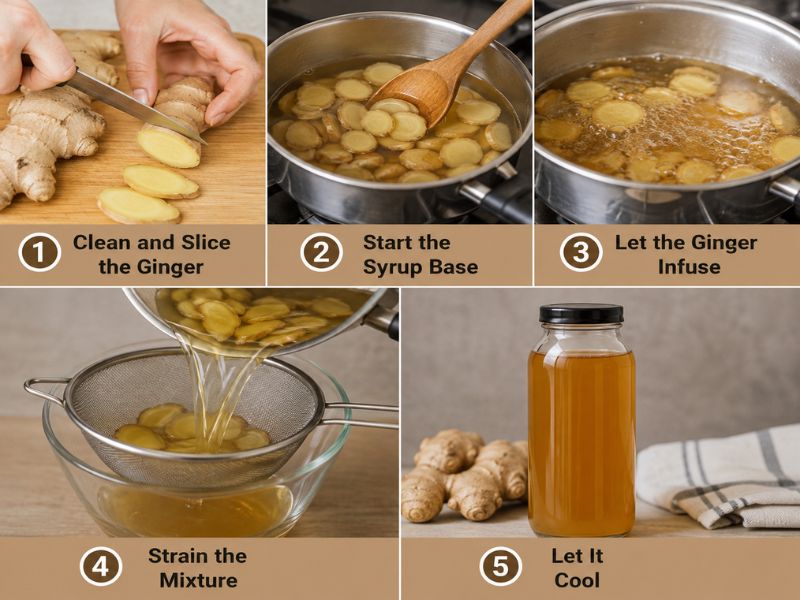
Now comes the easy part. The preparation does not require advanced cooking skills, but paying attention to heat and timing will improve the flavor. Before starting this how to make ginger syrup recipe, gather your ingredients and prepare a clean saucepan and strainer.
Step 1: Clean and Slice the Ginger
Begin by rinsing the ginger under cool water to remove any surface dirt. You can peel it if the skin looks tough, although very fresh ginger with thin skin does not always require peeling.
A teaspoon works surprisingly well as a peeling tool because its edge can follow the curves of the root. After peeling, cut the ginger into thin slices.
There is no need to mince it. In fact, larger slices make straining easier later while still giving the water plenty of contact with the ginger.
Step 2: Start the Syrup Base
Place the sliced ginger, sugar, and water into a saucepan. Stir briefly so the ingredients are distributed throughout the pan.
Next, place the saucepan over medium heat. Warm the mixture gradually until the sugar has dissolved and the liquid reaches a gentle simmer.
Avoid turning the heat too high. A slow approach gives the ginger time to release its flavor without forcing the mixture to reduce too quickly.
Step 3: Let the Ginger Infuse
Once small bubbles begin appearing, lower the heat. Let the mixture simmer gently for approximately 15 to 20 minutes.
Stir occasionally, especially during the early part of cooking, to ensure that the sugar does not settle at the bottom. Meanwhile, watch the color and aroma of the syrup.
If you prefer a stronger ginger flavor, turn off the heat after simmering and leave the ginger in the saucepan for another 10 to 15 minutes. As a result, you can increase the flavor without continuing to reduce the liquid.
Step 4: Strain the Mixture
When the syrup tastes right, remove the pan from the stove. Set a fine strainer over a clean heatproof bowl or jug.
Pour the mixture through the strainer slowly. Allow the liquid to pass through naturally, and then press the ginger lightly with a spoon if you want to recover a little more syrup.
Do not crush the ginger aggressively because tiny particles can make the syrup cloudy.
Step 5: Let It Cool
Allow the strained syrup to cool before transferring it to its storage container. Once it reaches room temperature, pour it into a clean jar or bottle with a secure lid.
Finally, place the container in the refrigerator. Keeping the preparation date on a small label can also help you monitor its freshness.
How to Control the Ginger Flavor
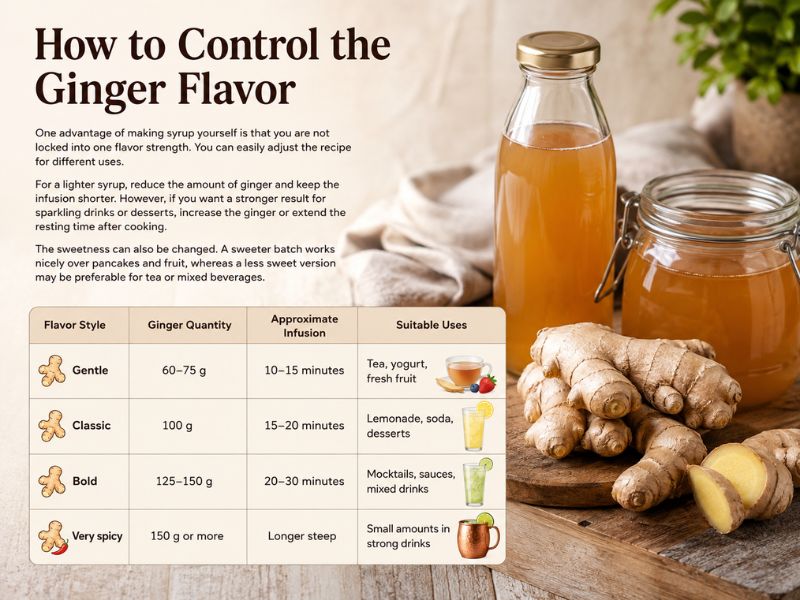
One advantage of making syrup yourself is that you are not locked into one flavor strength. You can easily adjust the recipe for different uses.
For a lighter syrup, reduce the amount of ginger and keep the infusion shorter. However, if you want a stronger result for sparkling drinks or desserts, increase the ginger or extend the resting time after cooking.
The sweetness can also be changed. A sweeter batch works nicely over pancakes and fruit, whereas a less sweet version may be preferable for tea or mixed beverages.
| Flavor Style | Ginger Quantity | Approximate Infusion | Suitable Uses |
| Gentle | 60–75 g | 10–15 minutes | Tea, yogurt, fresh fruit |
| Classic | 100 g | 15–20 minutes | Lemonade, soda, desserts |
| Bold | 125–150 g | 20–30 minutes | Mocktails, sauces, mixed drinks |
| Very spicy | 150 g or more | Longer steep | Small amounts in strong drinks |
Flavor Ideas for Homemade Ginger Syrup
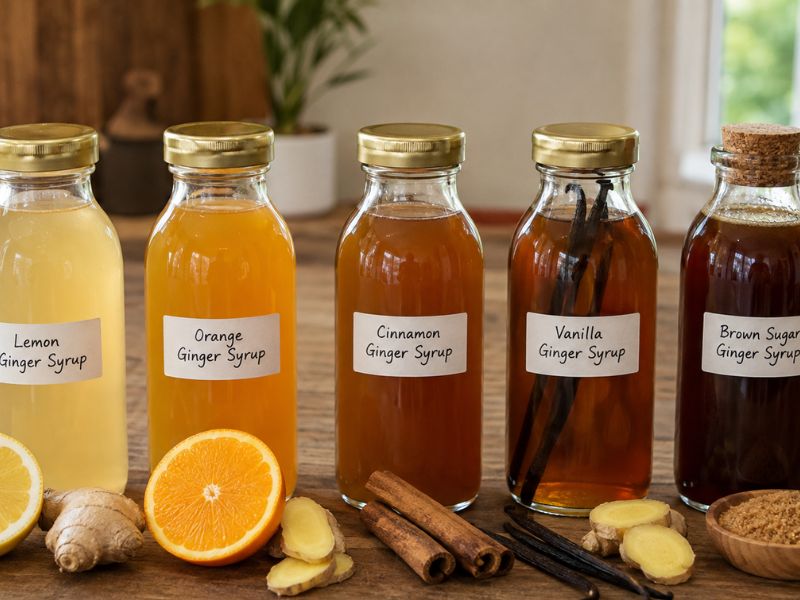
The basic recipe gives you a flexible starting point. Once you are comfortable with it, try adding another ingredient to create a completely different character.
Lemon and Ginger Syrup
Add a few thin strips of lemon peel while the ginger simmers. The citrus aroma cuts through the sweetness and makes the syrup particularly refreshing.
However, remove the peel before storing the syrup because prolonged contact can make the flavor stronger and more bitter.
Orange Ginger Syrup
Orange peel creates a softer citrus profile. Moreover, it pairs beautifully with baked goods, fruit desserts, and warm beverages.
Use only the colored outer portion of the peel whenever possible because the white layer underneath can add bitterness.
Cinnamon Ginger Syrup
A small cinnamon stick can give the syrup a cozy spice note. This version is especially enjoyable in warm tea, apple-based drinks, and autumn-inspired desserts.
Vanilla Ginger Syrup
Vanilla brings a smooth, mellow quality to the sharper ginger flavor. Therefore, this variation is a natural match for ice cream, pancakes, custards, and baked fruit. If you enjoy making sweet homemade treats, you can also explore these white chocolate recipes for more creamy dessert ideas.
Brown Sugar Version
Replace the white sugar with brown sugar if you prefer a richer, slightly caramel-like taste. The resulting syrup will be darker, and its flavor will be more pronounced.
Ginger Syrup and Regular Simple Syrup: What Is the Difference?
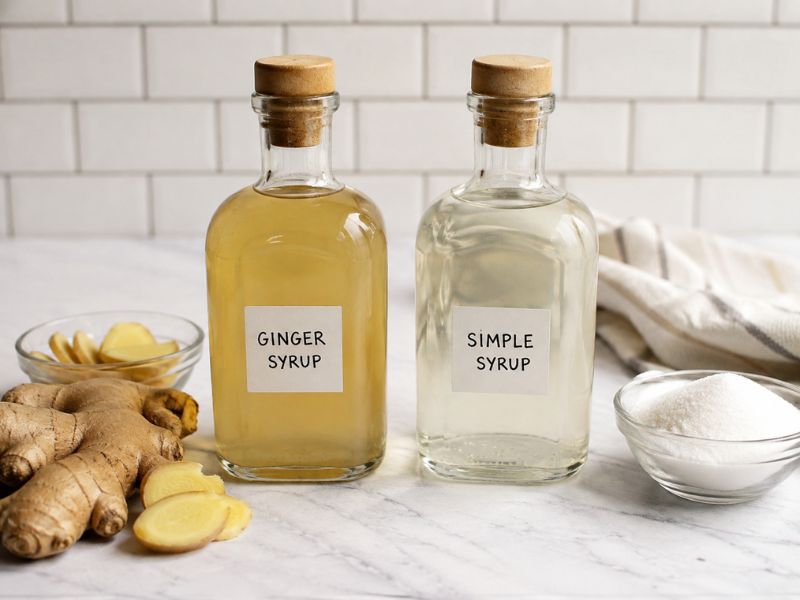
Although both syrups can sweeten drinks, they are not interchangeable in every situation.
| Characteristic | Ginger Syrup | Basic Simple Syrup |
| Main taste | Sweet with ginger warmth | Primarily sweet |
| Flavor source | Fresh ginger | Sugar |
| Color | Clear to light golden | Usually clear |
| Preparation | Requires ginger infusion | Sugar simply dissolves |
| Ideal uses | Tea, soda, desserts, mocktails | Drinks and general sweetening |
| Flavor flexibility | High | Moderate |
Simple syrup mainly contributes sweetness. Ginger syrup, by comparison, provides sweetness plus a recognizable spice flavor. Consequently, it can make a drink taste more complex without requiring several additional ingredients.
How to Keep Ginger Syrup From Crystallizing
Sugar crystals can sometimes appear when a syrup becomes overly concentrated or when undissolved sugar remains around the saucepan.
To reduce the chance of crystallization, make sure the sugar dissolves completely before the mixture cooks for an extended period. In addition, avoid repeatedly boiling the syrup after it has reached the desired consistency.
Keep the heat moderate and do not scrape dried sugar from the sides of the pan back into the syrup.
If crystals appear later, gently warm the syrup until they disappear. Nevertheless, avoid excessive heating because every extra minute of evaporation makes the syrup more concentrated.
Storing Homemade Ginger Syrup Safely
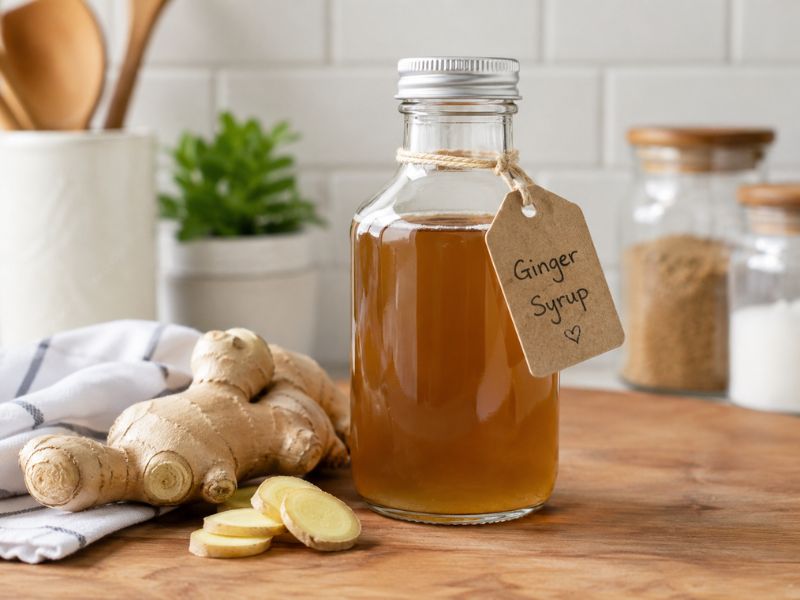
Homemade syrup does not contain the preservatives found in many commercial products. Therefore, refrigeration is the safest everyday storage choice.
Use a freshly cleaned jar or bottle with a tight-fitting lid. Let the syrup cool before sealing it, and place it in the refrigerator promptly. Once you know how to make ginger syrup recipe, proper storage will help you keep each homemade batch fresh for longer.
| Storage Option | Practical Time Frame | Best Practice |
| Refrigerator | Around 1–2 weeks | Keep sealed and chilled |
| Freezer | Around 2–3 months | Freeze in small portions |
| Countertop | Not recommended for extended storage | Refrigerate after cooling |
Before using an older batch, inspect it carefully. If you notice mold, an unusual smell, unexpected bubbling, or a significant change in appearance, discard it rather than trying to rescue it.
Common Problems When Making Ginger Syrup
Even though the recipe is simple, small differences in ingredients and cooking can change the result.
Why Does My Syrup Taste Too Mild?
Your ginger may not have been strong enough, or the slices may have been too thick. Therefore, use fresher ginger, slice it more thinly, or allow it to steep for longer.
Why Is the Ginger Flavor Too Powerful?
A very strong batch can usually be balanced by adding a little water. Next time, reduce the amount of ginger or shorten the infusion period.
Why Did My Syrup Become Very Thick?
The pan probably stayed on the heat too long, allowing too much water to evaporate. Add a small amount of warm water gradually until the desired consistency returns.
Why Is the Syrup Cloudy?
Tiny pieces of ginger can pass through an ordinary strainer. For a clearer result, strain the syrup a second time through a finer mesh.
Why Is It Sweeter Than Expected?
Long cooking reduces the water content and concentrates the sugar. However, you can balance a serving by mixing it with unsweetened tea, sparkling water, or another suitable liquid.
Delicious Ways to Use Ginger Syrup
A jar of ginger syrup can become useful in far more recipes than you might initially expect.
Add It to Lemonade
Mix a spoonful into fresh lemonade for a sweet drink with a gentle spicy finish. Add ice and lemon slices, and you have an easy homemade refresher .The best part of this how to make ginger syrup recipe is how easily the syrup fits into drinks, desserts, and breakfast dishes.
Make Ginger Sparkling Water
Pour sparkling water into a glass and add ginger syrup to taste. A squeeze of lime adds another layer of freshness.
Sweeten Iced Tea
Ginger syrup dissolves easily in chilled tea, unlike granulated sugar, which can settle at the bottom. Moreover, it works with black tea, green tea, and many herbal varieties.
Stir It Into Hot Tea
A small amount can turn ordinary tea into a warming ginger drink. Add lemon if you enjoy a sharper citrus note.
Drizzle It Over Breakfast
Try it over pancakes, waffles, French toast, or oatmeal. It also pairs particularly well with sliced bananas, apples, pears, and toasted nuts.
Use It With Desserts
A light drizzle over vanilla ice cream or plain yogurt adds instant flavor. Likewise, you can spoon a little over baked apples, pears, or rice pudding.
Dress Up Fresh Fruit
Combine a small amount of cooled syrup with lemon juice and toss it with fresh fruit. The result is simple, bright, and naturally appealing.
Add It to Savory Recipes
Ginger syrup can also have a place outside desserts. For example, a small amount can contribute sweetness to a homemade glaze or sauce for roasted vegetables. For another comforting homemade meal, you can also try this white sauce pasta recipe for a creamy and satisfying dish.
Helpful Tips for a Better Batch
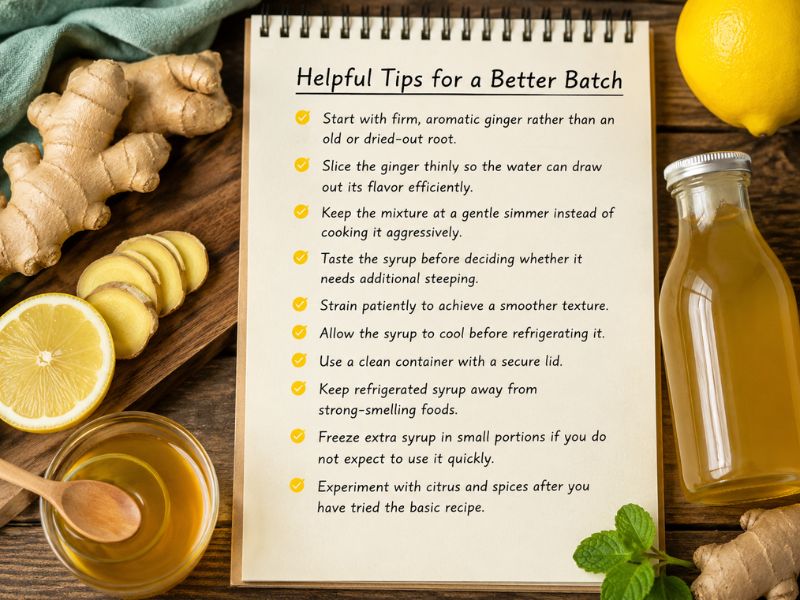
A few simple habits can make your homemade syrup more consistent from one batch to the next.
- Start with firm, aromatic ginger rather than an old or dried-out root.
- Slice the ginger thinly so the water can draw out its flavor efficiently.
- Keep the mixture at a gentle simmer instead of cooking it aggressively.
- Taste the syrup before deciding whether it needs additional steeping.
- Strain patiently to achieve a smoother texture.
- Allow the syrup to cool before refrigerating it.
- Use a clean container with a secure lid.
- Keep refrigerated syrup away from strong-smelling foods.
- Freeze extra syrup in small portions if you do not expect to use it quickly.
- Experiment with citrus and spices after you have tried the basic recipe.
Frequently Asked Questions
1. How long can homemade ginger syrup stay refrigerated?
Properly stored homemade ginger syrup is best used within about 1–2 weeks.
2. Can powdered ginger replace fresh ginger?
Fresh ginger gives the syrup a cleaner flavor, while powdered ginger may leave the mixture cloudy and slightly gritty.
3. Can brown sugar be used instead of white sugar?
Yes, brown sugar works well and gives the syrup a darker color with a deeper caramel-like flavor.
4. How can I make ginger syrup more concentrated?
Use additional fresh ginger or allow the cooked mixture to steep longer before removing the ginger.
5. Is homemade ginger syrup suitable for freezing?
Yes, you can freeze it in small airtight portions and thaw only the amount you need.
Conclusion
Learning how to make ginger syrup recipes gives you an easy way to keep a versatile homemade flavoring on hand. With fresh ginger, sugar, water, and a little patience, you can create a syrup that works in everything from sparkling drinks and iced tea to pancakes and desserts. Moreover, the recipe is easy to customize, so you can make it mild, spicy, citrusy, or warmly spiced depending on how you plan to use it. Start with the classic version, adjust the flavor on your next batch, and enjoy discovering just how many everyday recipes can benefit from a little homemade ginger sweetness.