
If you’ve ever wondered how to cook a polenta recipe the right way, you’re in for a treat. When you understand how to cook polenta recipe properly, this comforting dish delivers incredible flavor and a wonderfully creamy texture .Made from ground corn, this traditional Northern Italian staple can, therefore, transform into a creamy and satisfying meal with just a handful of ingredients .In addition, it pairs beautifully with everything from roasted vegetables, such as how to boil cabbage, to slow-cooked meats and rich sauces.
Learning how to cook a polenta recipe is worthwhile because the technique is simple, the ingredients are affordable, and the results are consistently impressive. Whether you’re preparing a cozy family dinner or an elegant weekend meal, homemade polenta adds warmth, richness, and authentic Italian comfort to the table.
How to Cook Polenta: Grain Selection Basics
First of all, choosing the right type of polenta is the first step toward achieving the texture you want While all varieties come from corn, they differ in grind size, cooking time, and final consistency.
What Is Polenta and How to Cook It?
Traditionally, polenta is made from dried yellow corn that has been ground into a coarse meal Traditionally, it is slowly simmered with water or stock until thick and creamy.Additionally, depending on how it is served, polenta can resemble mashed potatoes, grits, or even sliced bread after cooling.
Unlike regular cornmeal used for baking, traditional polenta has a coarser texture that creates a heartier bite.
Yellow Cornmeal for Polenta
Standard yellow cornmeal is finely ground and widely available. While it can be used for polenta, it produces a smoother consistency than traditional coarse-ground varieties.
It works well when you want a softer, creamier texture and shorter cooking time.
Coarse-Ground Traditional Polenta
This is the classic choice for authentic Italian polenta.
Moreover, its larger grains absorb liquid gradually, creating a rich texture with a gentle corn flavor. Although it requires more patience, the results are well worth the extra cooking time.
Best for:
- Creamy traditional polenta
- Rustic Italian dishes
- Slow cooking
Quick-Cooking Polenta
Quick-cooking polenta is partially pre-cooked before packaging, reducing cooking time dramatically.
While it is convenient for busy weeknights, it doesn’t develop quite the same depth of flavor as traditional varieties.
Best for:
- Fast dinners
- Beginner cooks
- Everyday meals
Instant Polenta
Instant polenta cooks in only a few minutes.
Although it’s the fastest option, it generally has a softer texture and milder flavor compared to slow-cooked versions.
Choose this variety only when time is your highest priority.
Table 1: Polenta Types Comparison
| Polenta Type | Grain Size | Average Cooking Time | Best Uses |
| Yellow Cornmeal | Fine | 20–30 minutes | Smooth creamy polenta |
| Traditional Polenta | Coarse | 40–50 minutes | Authentic Italian recipes |
| Quick-Cooking Polenta | Medium | 5–10 minutes | Weeknight meals |
| Instant Polenta | Very Fine | 2–5 minutes | Quick side dishes |
Chef’s Tip: For the richest flavor and best texture, choose coarse-ground polenta whenever you have enough cooking time.
Ingredients for Cooking Polenta & Liquid Ratios
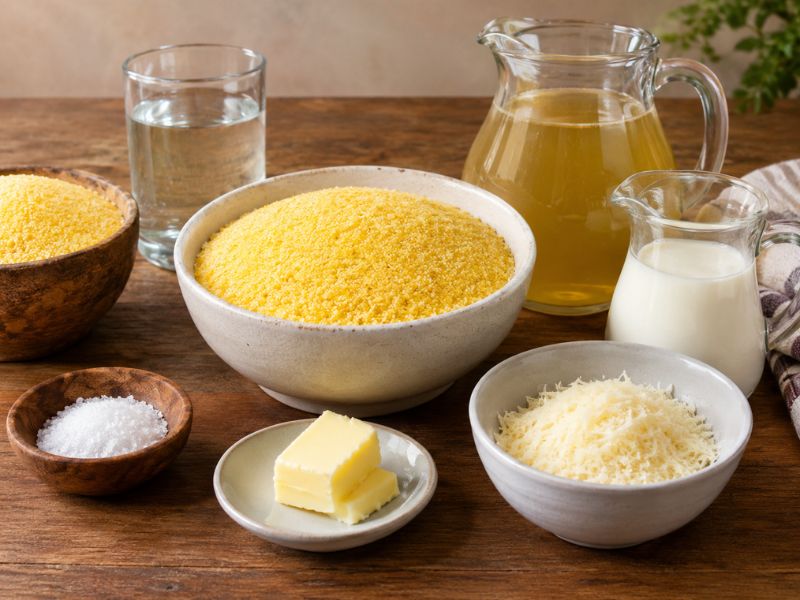
Great polenta starts with quality ingredients. Since there are so few components, every ingredient contributes to the final flavor .Learning how to cook a polenta recipe also means understanding how each ingredient affects the final texture and flavor.
Core Ingredients
You’ll need:
- 1 cup coarse-ground polenta
- Water or chicken/vegetable stock
- Salt
- Butter
- Parmesan cheese (optional but highly recommended)
- Whole milk or heavy cream (optional)
Each ingredient plays an important role.
Water highlights the natural corn flavor, while stock creates a richer, more savory dish.Additionally, butter adds silkiness, while Parmesan introduces a nutty, salty finish that makes homemade polenta unforgettable.
Water vs. Stock
Both liquids produce delicious results, but they create different flavor profiles.
Water
- Cleaner corn flavor
- Traditional taste
- Lighter texture
Chicken Stock
- Richer taste
- More savory
- Excellent with roasted meats
Vegetable Stock
- Perfect for vegetarian dishes
- Adds subtle depth
- Complements mushrooms and vegetables beautifully
Furthermore, many professional chefs combine equal parts water and stock to achieve a well-balanced flavor.
Adding Milk for Extra Creaminess
Milk isn’t mandatory, but it transforms the texture.
Adding a small amount during the final minutes of cooking creates an incredibly smooth and luxurious consistency.
For even richer polenta, stir in a splash of heavy cream before serving.
Butter and Cheese Ratios
Once the polenta has fully cooked, finish it with:
- 2–3 tablespoons butter
- ½ to 1 cup freshly grated Parmesan cheese
Stir until completely melted.
The result becomes glossy, creamy, and full of flavor.
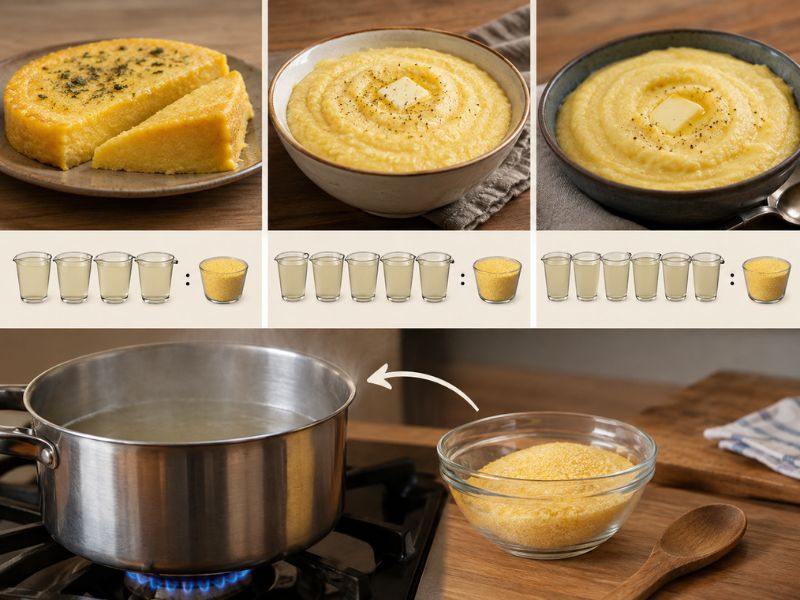
Table 2: Ideal Liquid-to-Polenta Ratios
| Desired Texture | Liquid Ratio |
| Thick for slicing | 4 cups liquid : 1 cup polenta |
| Classic creamy | 5 cups liquid : 1 cup polenta |
| Extra creamy | 6 cups liquid : 1 cup polenta |
Pro Tip: Always heat your cooking liquid before adding the polenta. This helps the grains cook evenly and minimizes lumps.
How to Cook a Polenta Recipe: Step-by-Step Guide
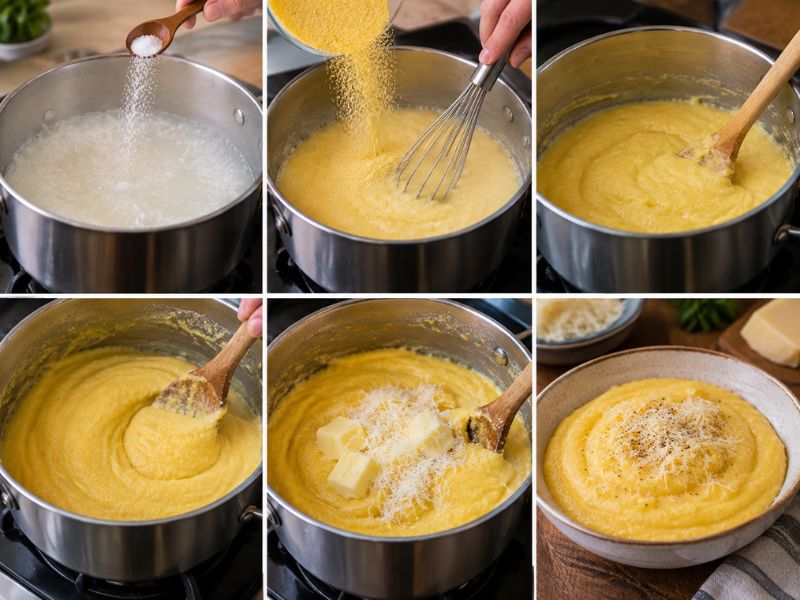
Learning how to cook polenta recipe correctly isn’t difficult, but patience makes all the difference. Gentle heat and occasional stirring produce a silky, restaurant-quality texture.
Step 1: Heat the Liquid
Pour your chosen liquid into a heavy-bottomed saucepan.
Add salt and bring it to a gentle boil over medium heat.
Avoid using extremely high heat because rapid boiling can cause uneven cooking later.
Step 2: Slowly Whisk in the Polenta
Once the liquid begins to boil, reduce the heat slightly.
Gradually sprinkle the polenta into the pot while whisking continuously.
Never dump all the polenta in at once.
Adding it slowly prevents stubborn lumps from forming.
Step 3: Lower the Heat
After all the polenta has been incorporated, reduce the heat to low.
The mixture should barely bubble.
Slow cooking allows every grain to soften evenly.
Step 4: Stir Regularly
Meanwhile, continue stirring every few minutes using a wooden spoon or silicone spatula.
Additionally, scrape along the bottom and sides of the pot to prevent the polenta from sticking.
Traditional coarse polenta usually cooks for 40–50 minutes, while quick-cooking versions need only 5–10 minutes.
Step 5: Check the Texture
Likewise, properly cooked polenta should feel smooth and creamy without any gritty texture.
Taste a spoonful.
If you notice graininess, simply continue cooking while adding small splashes of hot liquid if necessary.
Step 6: Finish with Butter and Cheese
Once fully cooked:
- Remove from the heat.
- Stir in butter.
- Add freshly grated Parmesan cheese.
- Mix until completely smooth and glossy.
If the polenta becomes too thick, stir in a little warm milk or stock until it reaches your preferred consistency.
Chef’s Tip: Let the finished polenta rest for 3–5 minutes before serving.Therefore, this short resting time allows the starches to settle, creating an even creamier texture.
Common Mistakes to Avoid
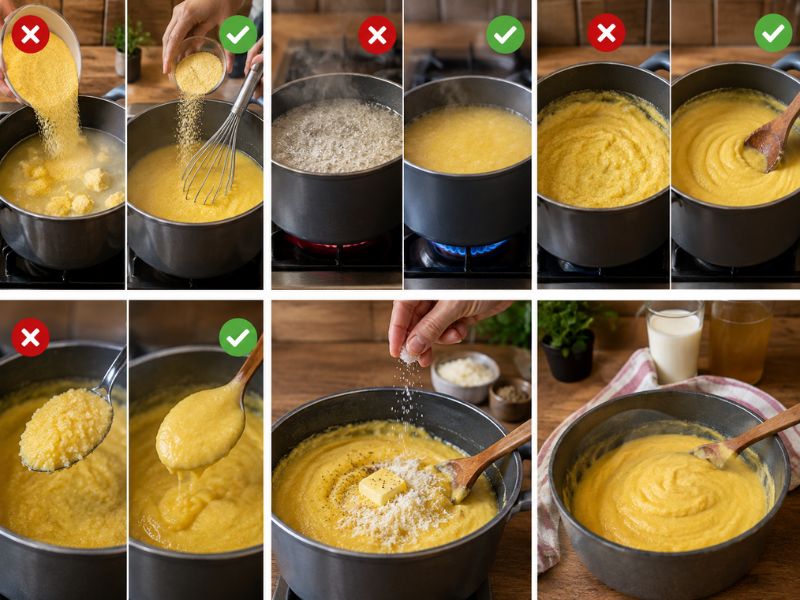
Even though polenta is made with only a few ingredients, small mistakes can affect its texture and flavor. Fortunately, these mistakes are easy to avoid once you know what to watch for.
1. Adding the Polenta Too Quickly
However, one of the most common mistakes is pouring all the polenta into the hot liquid at once.This usually creates stubborn lumps that are difficult to remove later.
Instead, sprinkle the polenta in gradually while whisking continuously. Taking an extra minute during this step makes a noticeable difference in the final texture.
2. Using Heat That’s Too High
High heat may seem like a way to cook faster, but it often causes the polenta to stick to the bottom of the pot or cook unevenly.
Meanwhile, once the liquid reaches a boil, reduce the heat to low and let the polenta simmer gently; as a result, slow cooking helps develop a smoother, creamier consistency.
3. Not Stirring Often Enough
Polenta doesn’t require constant stirring, but it should be stirred regularly to prevent sticking and ensure even cooking.
A quick stir every few minutes is usually enough, especially when using traditional coarse-ground polenta.
4. Undercooking the Polenta
If the grains still taste gritty, the polenta needs more time.
Well-cooked polenta should be soft, creamy, and completely smooth. Taste it before serving and continue cooking if necessary.
5. Forgetting to Season
Salt is essential for bringing out the natural sweetness of the corn.
Likewise, finishing with butter and Parmesan cheese adds richness and depth. Taste the polenta before serving and adjust the seasoning if needed.
Chef’s Tip: If the polenta thickens too much while sitting, stir in a splash of warm stock, milk, or water until it becomes creamy again.
How to Cook Polenta: Variations & Serving Ideas
Moreover, one of the best things about learning how to cook a polenta recipe is discovering how versatile it can be. With just a few adjustments, you can enjoy it in several delicious ways.
How to Cook Creamy Polenta
Serve it immediately after cooking for a soft, silky texture.
It pairs beautifully with:
- Garlic butter mushrooms
- Braised beef
- Roasted chicken
- Italian sausages
- Shrimp
- Grilled salmon
- Creamy spinach
- Roasted vegetables
For a hearty and flavorful meal, creamy polenta also pairs wonderfully with rich dishes like chicken korma, especially when you want a comforting combination of creamy textures and savory flavors. A sprinkle of fresh herbs such as parsley, basil, or thyme adds brightness and color.
How to Cook Baked Polenta
Spread cooked polenta into a lightly greased baking dish and allow it to cool until firm.
Top it with:
- Marinara sauce
- Mozzarella cheese
- Parmesan
- Fresh basil
Bake until the cheese is melted and lightly golden.
The result is similar to a comforting Italian casserole.
How to Cook Fried Polenta
Once chilled, slice the firm polenta into squares, rectangles, or rounds.
Lightly brush with olive oil before frying or baking until crisp on the outside and tender inside.
Serve with:
- Garlic aioli
- Tomato sauce
- Pesto
- Herb butter
Additionally, these crispy polenta cakes make an excellent appetizer or side dish.
Cooking Polenta on the Grill
Firm polenta slices also grill beautifully.
Brush them with olive oil and cook over medium-high heat until grill marks appear on both sides.
Grilled polenta pairs especially well with grilled vegetables, steak, or barbecue dishes.
Creative Flavor Ideas for How to Cook a Polenta Recipe
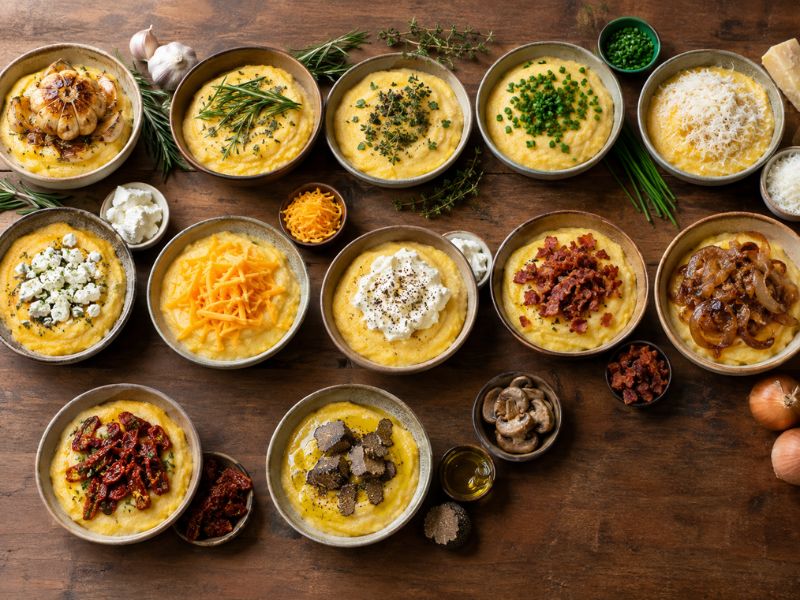
Customize your polenta with ingredients like:
- Roasted garlic
- Fresh rosemary
- Thyme
- Chives
- Parmesan cheese
- Pecorino Romano
- Goat cheese
- Cheddar
- Cream cheese
- Crumbled bacon
- Caramelized onions
- Sun-dried tomatoes
- Truffle oil
- Sautéed mushrooms
Table 3: Flavor Add-ins & Pairings
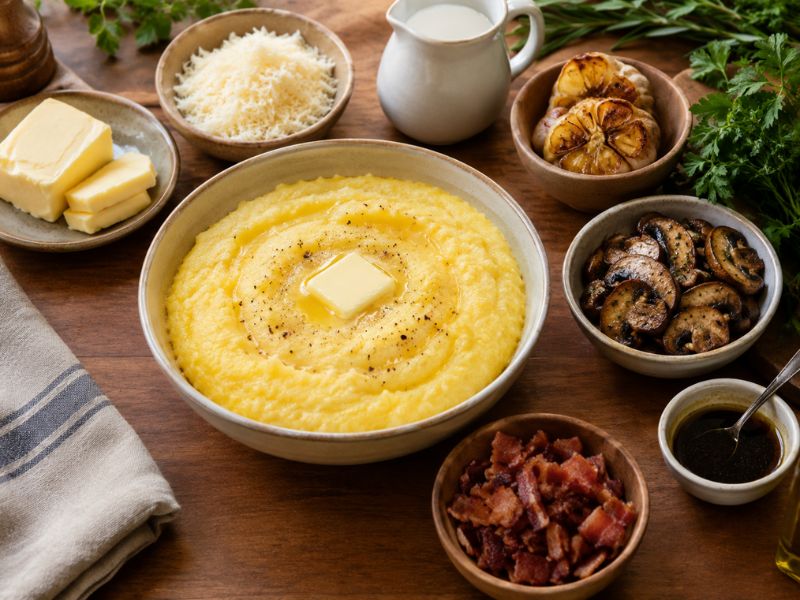
| Ingredient | When to Add | Flavor Profile |
| Butter | After cooking | Rich and silky |
| Parmesan Cheese | At the end | Nutty, savory, creamy |
| Heavy Cream | Final few minutes | Extra smooth and luxurious |
| Roasted Garlic | After cooking | Sweet, mellow garlic flavor |
| Fresh Herbs | Before serving | Fresh and aromatic |
| Sautéed Mushrooms | As a topping | Earthy and hearty |
| Truffle Oil | Just before serving | Rich and elegant |
| Crispy Bacon | Garnish | Smoky and salty |
Pro Tip: Serve creamy polenta immediately after cooking. As it cools, it naturally becomes thicker, so timing is important for the smoothest texture.
How to Cook Polenta: Storage & Reheating
Homemade polenta stores surprisingly well, making it perfect for meal prep. Knowing how to cook a polenta recipe makes it easier to prepare extra servings that you can enjoy later.
Refrigerating Leftovers: How to Cook a Polenta Recipe Later
Allow the polenta to cool completely before transferring it to an airtight container.
Store it in the refrigerator for up to 4 days.
Meanwhile, as it chills, it will become firm enough to slice for baking, frying, or grilling.
Freezing Polenta: How to Cook a Polenta Recipe Later
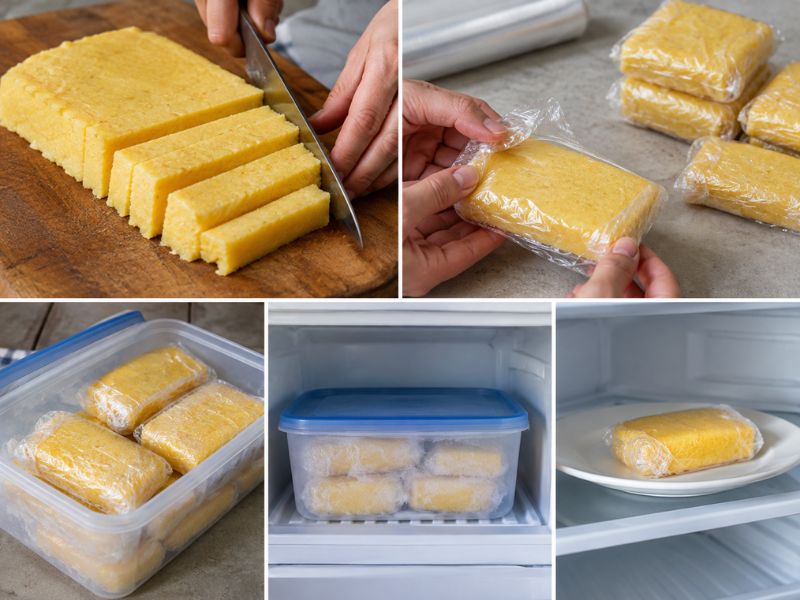
Polenta also freezes well.
Slice the cooled polenta into portions and wrap each piece individually before placing them in a freezer-safe container or bag.
Freeze for up to 2 months.
Thaw overnight in the refrigerator before reheating.
Reheating Creamy Polenta: How to Cook a Polenta Recipe
Since chilled polenta thickens considerably, you’ll need to add moisture during reheating.
Warm it gently over low heat while stirring in:
- Warm milk
- Chicken stock
- Vegetable stock
- Water
Continue stirring until the texture becomes smooth and creamy again.
Additionally, avoid reheating over high heat, as it can scorch the bottom of the pan.
Frequently Asked Questions
1. Can I use regular cornmeal instead of polenta?
Yes, but it will produce a smoother texture than traditional coarse-ground polenta.
2. Why is my polenta lumpy?
Lumps usually form when the polenta is added too quickly instead of whisking it in gradually.
3. How do I know when polenta is fully cooked?
It is done when the texture is creamy, smooth, and no longer tastes gritty.
4. Can I make polenta ahead of time?
Certainly, you can refrigerate it for up to 4 days and, afterward, reheat it with a little liquid to restore its creamy texture.
5. What is the best cheese for creamy polenta?
Freshly grated Parmesan is the classic choice because it melts smoothly and adds rich flavor.
Conclusion
Learning how to cook polenta recipes is, therefore, a simple and delicious way to bring authentic Italian comfort food into your kitchen. First of all, by choosing the right type of polenta and, in addition, using the proper liquid ratio, you can achieve excellent results. Furthermore, by cooking it gently and, finally, finishing it with butter and cheese, you can create a creamy, flavorful dish. As a result, this versatile dish pairs beautifully with vegetables, meats, and sauces, while also making an easy and comforting addition to almost any meal.. Whether you serve it soft and creamy or transform leftovers into crispy polenta cakes, this versatile recipe is sure to become a dependable favorite for everyday meals and special occasions alike.