
Cabbage does not need a complicated recipe to become a delicious part of a meal. With a fresh head of cabbage, hot water, a little seasoning, and careful cooking, you can turn it into a soft and flavorful side dish in minutes. This how to boil cabbage recipe explains everything from choosing and cutting the vegetable to getting the texture right and finishing it with simple seasonings.
What Makes This How to Boil Cabbage Recipe So Easy?
Some vegetables require roasting, sautéing, or several cooking steps before they are ready to serve. Cabbage is much more forgiving. Once it has been cleaned and cut, it can go straight into a pot of hot water.
That makes it especially handy on evenings when you want a vegetable side without spending a lot of time in the kitchen. Also, the mild flavor of cabbage gives you plenty of freedom when it comes to seasoning.
For example, you can keep it very simple with butter and pepper. Alternatively, garlic, herbs, lemon, paprika, or cheese can turn the same basic vegetable into something completely different.
Another useful feature is that boiled cabbage works with many types of meals. It can sit beside roasted meat, grilled chicken, fish, potatoes, rice, beans, or other vegetables .This how to boil cabbage recipe is also easy to customize with your favorite seasonings.
Ingredients for This Cabbage Recipe
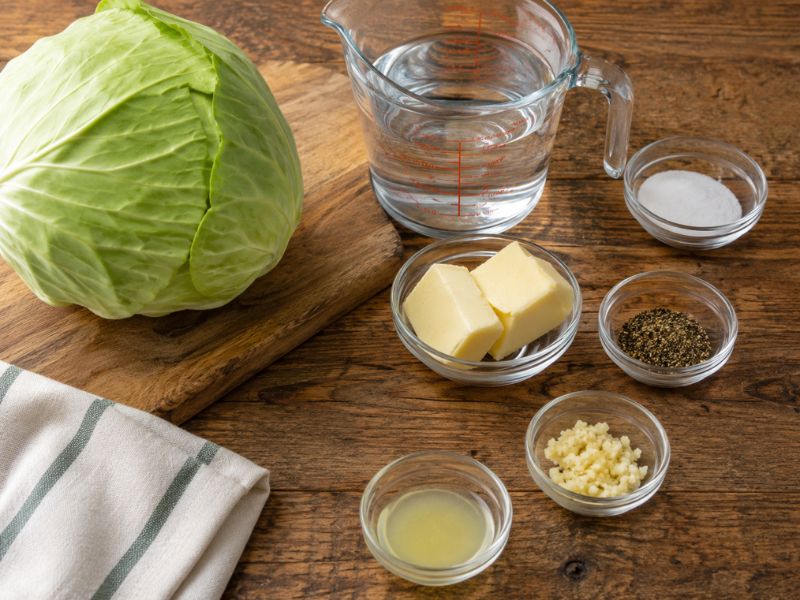
You do not need a long shopping list. The basic ingredients are probably already in your kitchen.
What You Need
- 1 medium head green cabbage
- 5–6 cups water
- 1 teaspoon salt
- 1 tablespoon butter
- ¼ teaspoon ground black pepper
- 1 garlic clove, finely minced, optional
- 1 teaspoon lemon juice, optional
These ingredients create a simple version, but they are not strict limits.
For example, olive oil can replace butter if you want a lighter finish. Similarly, vegetable broth can replace some of the water when you want a deeper savory taste. This how to boil cabbage recipe uses simple ingredients that are easy to find in most kitchens.
Fresh parsley, dill, paprika, onion powder, chili flakes, or grated Parmesan can also be added according to the meal you are preparing. If you’re preparing a meal with homemade pastry on the side, learning how to make Empanada Dough Recipe can also help you create fresh, flaky dough for a variety of savory or sweet fillings.
Picking a Good Head of Cabbage for This How to Boil Cabbage Recipe
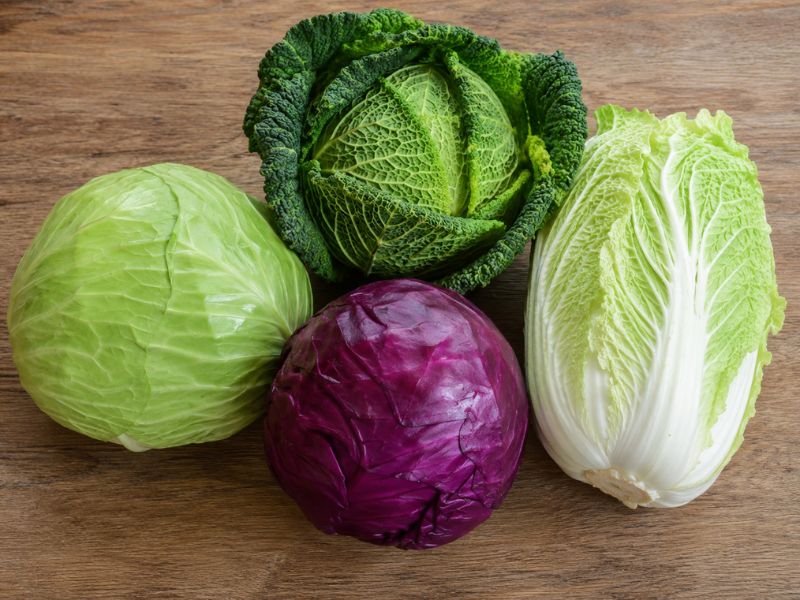
Before you start cooking, spend a moment choosing the right cabbage. A fresh head should feel fairly heavy and firm when you pick it up.
The leaves should have a crisp appearance rather than looking extremely limp. Small marks on the outside are not necessarily a concern because you can remove those leaves before cooking.
Green cabbage is an easy choice for this recipe because its leaves become pleasantly tender when boiled. However, other varieties can work too.
Savoy cabbage has softer, ruffled leaves, while napa cabbage has a more delicate texture. Red cabbage is another option, although its color and flavor will give the finished dish a different character.
Getting the Cabbage Ready for This How to Boil Cabbage Recipe
A little preparation before the pot goes on the stove makes the rest of the process much easier .Before starting this how to boil cabbage recipe, wash and prepare the cabbage properly.
Clean the Vegetable
Remove any loose or damaged outside leaves first. Then rinse the entire cabbage under cool running water.
Pay attention to the spaces between the leaves because dirt can sometimes collect there.
Cut It Into Manageable Pieces for This How to Boil Cabbage Recipe
Put the cabbage on a cutting board and slice it in half through the core. Cut each half again so you have four sections.
At this point, you have a choice.
If you want larger portions, keep the quarters mostly intact. If you prefer smaller bites, slice the quarters into strips or chunks.
There is no single correct shape. However, remember that smaller pieces will cook faster than large wedges.
Take Out the Hard Center
The thick central core is tougher than the surrounding leaves. Cut away that portion with a sharp knife.
Do not worry about removing every tiny piece of the core. Just take out the noticeably hard section so the remaining cabbage is easier to chew.
How to Boil Cabbage Recipe Step by Step
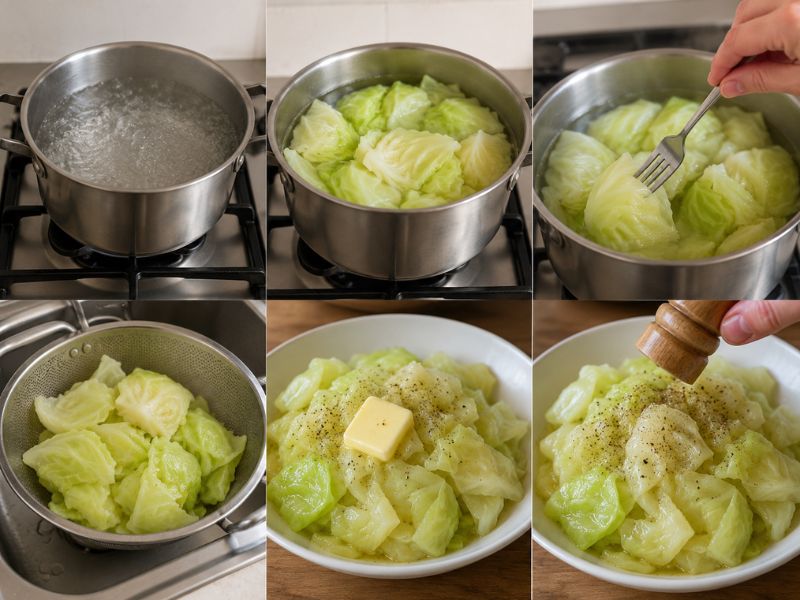
This how to boil cabbage recipe is simple, but checking the texture during cooking is important. Once the cabbage is prepared, the actual cooking is straightforward. The key is to pay attention to texture rather than blindly following a timer.
1. Start With Hot Water
Pour the water into a large saucepan or pot and add the salt.
Set the pot over medium-high heat and wait until the water is bubbling steadily.
If you want extra flavor from the beginning, use a mixture of water and vegetable or chicken broth.
2.Add the Prepared Cabbage for This How to Boil Cabbage Recipe
Lower the cabbage pieces carefully into the hot water.
If you are cooking a whole head’s worth of cabbage, the pot may look full initially. That is fine. The leaves will soften as they heat and gradually settle into the water.
After adding the cabbage, adjust the heat if necessary. You want steady cooking rather than extremely violent bubbling.
3. Watch the Texture
This is the part that matters most.
Cabbage can go from pleasantly tender to overly soft if it is forgotten on the stove. Therefore, begin checking it before you think it should be completely done.
Use a fork to test a thicker section. If the fork passes through without much resistance, the cabbage is ready for a softer texture.
If you prefer a little bite, remove it slightly earlier.
4. Drain It Well
Once the texture looks right, remove the cabbage from the heat and drain it in a colander.
Give it enough time to release trapped water. This small step makes a surprisingly big difference because excessive moisture can make the seasoning taste weak.
5. Finish While It Is Hot
Move the drained cabbage to a bowl or serving plate.
Add butter and black pepper while the cabbage is still warm. If you are using garlic, herbs, or lemon, add them now as well.
Toss everything gently so the seasoning reaches the leaves without breaking them apart.
Taste one piece before serving. If it needs more salt, pepper, lemon, or butter, adjust it at this point.
Cabbage Cooking Time Guide for This How to Boil Cabbage Recipe
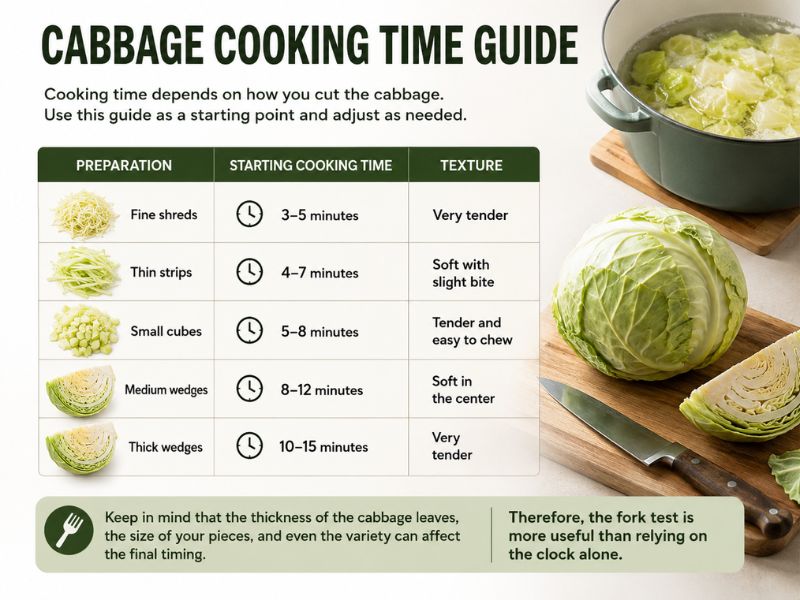
The cooking time changes depending on the way you cut the vegetable. Instead of treating these numbers as exact rules, use them as a starting point.
| Preparation | Starting Cooking Time | Texture |
| Fine shreds | 3–5 minutes | Very tender |
| Thin strips | 4–7 minutes | Soft with slight bite |
| Small cubes | 5–8 minutes | Tender and easy to chew |
| Medium wedges | 8–12 minutes | Soft in the center |
| Thick wedges | 10–15 minutes | Very tender |
Keep in mind that the thickness of the cabbage leaves, the size of your pieces, and even the variety can affect the final timing.
Therefore, the fork test is more useful than relying on the clock alone.
Three Easy Ways to Flavor This How to Boil Cabbage Recipe
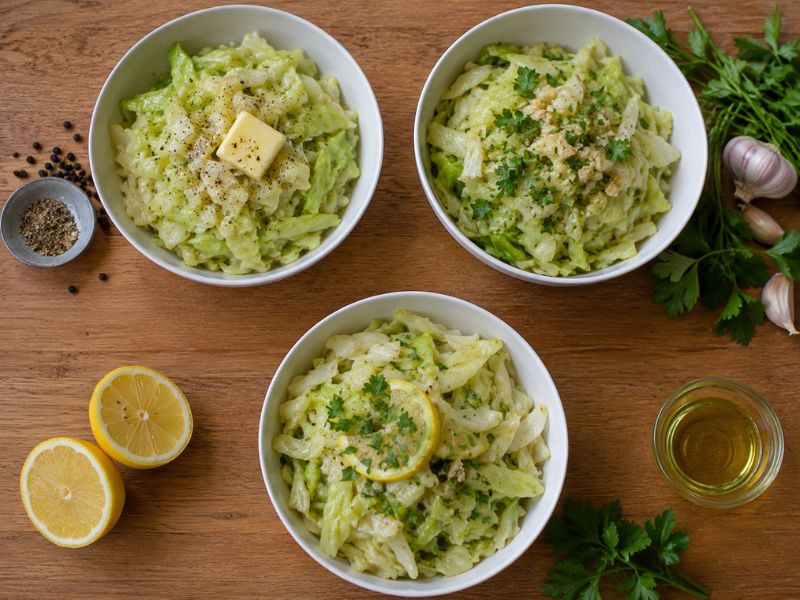
Boiling gives cabbage a soft texture, but the finishing ingredients determine much of the final taste.
Butter and Pepper for This How to Boil Cabbage Recipe
This is probably the easiest combination.
Add a small amount of butter to the hot cabbage and season it with black pepper. The butter gives the leaves a smooth finish while the pepper adds just enough contrast.
It is a good choice when you are serving cabbage alongside a strongly seasoned main course.The best part of this how to boil cabbage recipe is that you can change the flavor with different seasonings.
Garlic and Herbs
If you want more flavor, combine melted butter with minced garlic and fresh parsley.
Cook the garlic briefly in the butter before mixing it with the cabbage. The result is savory and aromatic without being heavy.
Dill can also be added if you enjoy a fresher herbal taste.
Lemon and Olive Oil
For a lighter finish, skip the butter and use a small drizzle of olive oil with lemon juice.
Add black pepper and chopped parsley or dill. The acidity from the lemon helps brighten the cabbage and keeps the dish from tasting flat.
Seasoning Combinations for This How to Boil Cabbage Recipe
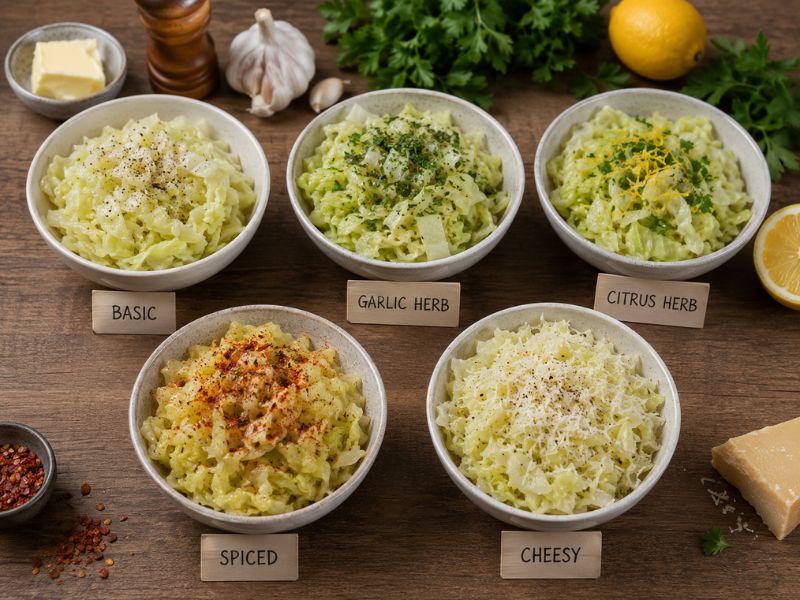
Here are a few simple combinations you can use depending on what you are serving.
| Seasoning Style | Suggested Additions | Overall Taste |
| Basic | Butter, salt, pepper | Mild and comforting |
| Garlic herb | Garlic, butter, parsley | Savory and aromatic |
| Citrus herb | Lemon, dill, parsley | Fresh and bright |
| Spiced | Paprika, chili flakes, pepper | Warm and slightly hot |
| Cheesy | Parmesan, butter, pepper | Rich and savory |
You can also mix ideas. For instance, garlic, lemon, and parsley work nicely together when you want something flavorful without making the cabbage heavy.
How to Keep This Cabbage Recipe From Getting Too Soft
Overcooked cabbage is one of the easiest ways to lose the pleasant texture of this vegetable.
The first thing to remember is that cooking continues for a short time even after the heat is turned off. Therefore, remove the cabbage from the water as soon as it reaches the texture you want.
Another useful trick is to avoid cutting everything into extremely small pieces. Larger pieces are easier to monitor and are less likely to become mushy quickly.
Additionally, do not leave cooked cabbage sitting in the pot of hot water. Drain it right away.
If you like cabbage with some structure, aim for tender leaves rather than extremely soft ones.
Why Does This Boiled Cabbage Recipe Taste Bland?
Cabbage contains plenty of water, so its natural flavor can become subtle after boiling.
That does not mean the recipe has failed. It simply means the finishing stage matters.
First, drain the cabbage thoroughly. Next, add enough seasoning to complement its mild taste.
Butter adds richness, lemon adds brightness, garlic provides savory depth, and herbs contribute freshness. Even a small amount of black pepper can make the flavor more noticeable.
Also, taste before serving rather than adding a large amount of seasoning all at once. This gives you better control over the final result.
Water or Broth: Which Should You Use?
Plain water is perfectly suitable for boiling cabbage. It keeps the flavor neutral and allows you to decide how you want to season the finished vegetable.
Broth, on the other hand, adds flavor during cooking.
| Cooking Liquid | Flavor Level | Best Choice When |
| Plain water | Mild | You want to season afterward |
| Vegetable broth | Savory | Making a meat-free meal |
| Chicken broth | Rich and savory | Serving with hearty foods |
| Water + broth | Balanced | You want moderate flavor |
If you choose a packaged broth, check its salt content before seasoning the cabbage. Otherwise, you may accidentally make the finished dish too salty.
Can You Boil Cabbage Without Salt?
Yes. Salt is used primarily for taste, so you can leave it out during cooking if you prefer.
Instead, use ingredients such as lemon juice, garlic, fresh herbs, black pepper, or a small drizzle of olive oil to build flavor.
If you are serving the cabbage to several people, seasoning it after cooking can also be useful because everyone can adjust their own portion.
Boiled vs. Steamed Cabbage
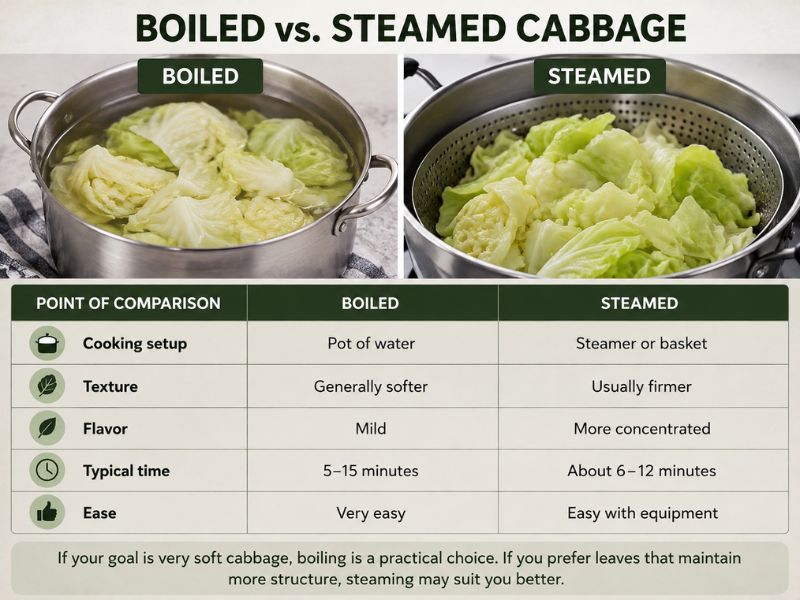
Boiling is not the only way to cook cabbage. Steaming is another simple option, although the texture can be somewhat different.
| Point of Comparison | Boiled | Steamed |
| Cooking setup | Pot of water | Steamer or basket |
| Texture | Generally softer | Usually firmer |
| Flavor | Mild | More concentrated |
| Typical time | 5–15 minutes | About 6–12 minutes |
| Ease | Very easy | Easy with equipment |
If your goal is very soft cabbage, boiling is a practical choice. If you prefer leaves that maintain more structure, steaming may suit you better.
Nutrition You Get From Cabbage
Cabbage is more than an inexpensive side dish. It can contribute several useful nutrients to a balanced eating pattern.
Vitamin C
Cabbage provides vitamin C, which supports normal immune function and helps the body perform several important processes.
Dietary Fiber
The vegetable also contains dietary fiber. Including fiber-containing vegetables in meals can support normal digestion.
Vitamin K
Cabbage supplies vitamin K, which has an important role in normal blood clotting and bone maintenance.
Naturally Light
Plain cabbage is naturally low in calories. Therefore, it can be an easy way to add vegetables to a meal without making the dish particularly heavy.
The final nutrition will depend on the ingredients you use. For example, adding generous amounts of butter or cheese will increase the overall calories and fat.
What Goes Well With Boiled Cabbage?
One of the best things about cabbage is how easily it fits into different meals.
For a comforting dinner, pair it with mashed potatoes and roasted chicken. Alternatively, serve it beside grilled fish and rice for a lighter plate. For another quick meal idea, you can also try a creamy can chicken salad recipe when you want something easy and satisfying.
It also works with beans, lentils, baked potatoes, meatloaf, or roasted vegetables.
If you have leftover cabbage, you do not have to serve it the same way again. Chop it and add it to a soup, egg scramble, rice dish, or vegetable skillet.
As a result, a simple side dish can become a useful ingredient for another meal.
Mistakes That Can Affect the Final Result
Leaving the Core in Place
The thick core is much firmer than the leaves. Removing most of it makes the cabbage more pleasant to eat.
Cutting Pieces at Completely Different Sizes
Tiny pieces will soften much faster than large wedges. Try to keep the pieces reasonably similar.
Walking Away While It Cooks
Cabbage does not need constant stirring, but it does need occasional checking. A few extra minutes can make a noticeable difference.
Draining Too Quickly
If you season cabbage while it is still holding lots of cooking water, the flavor can become diluted. Let it drain properly first.
Adding Too Much Seasoning Immediately
Because the cabbage is mild, it can be tempting to add lots of salt or spices. Start modestly, taste, and then build the flavor.
Practical Tips for Better Results
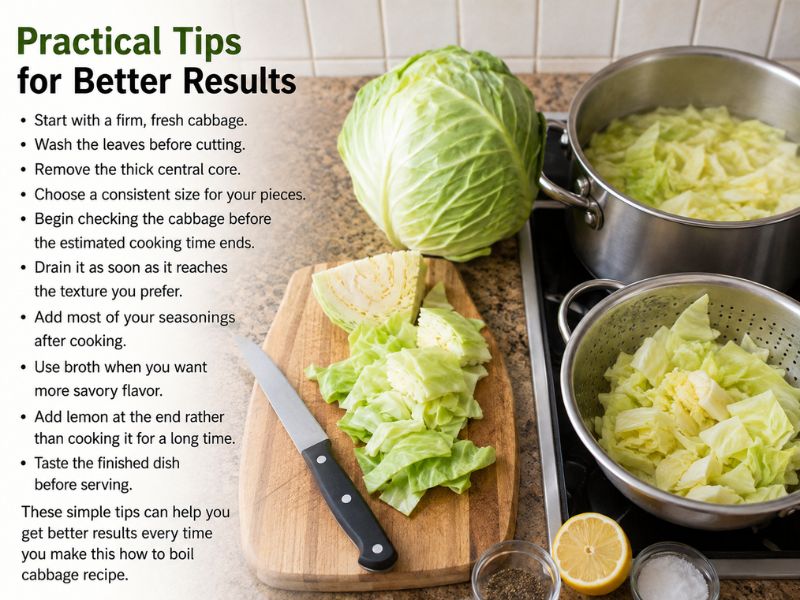
- Start with a firm, fresh cabbage.
- Wash the leaves before cutting.
- Remove the thick central core.
- Choose a consistent size for your pieces.
- Begin checking the cabbage before the estimated cooking time ends.
- Drain it as soon as it reaches the texture you prefer.
- Add most of your seasonings after cooking.
- Use broth when you want more savory flavor.
- Add lemon at the end rather than cooking it for a long time.
- Taste the finished dish before serving.
These simple tips can help you get better results every time you make this how to boil cabbage recipe.
How to Keep Leftover Cabbage
If you make more cabbage than you need, there is no reason to waste it.
Let the cooked vegetable cool, then transfer it to a clean airtight container. Keep it refrigerated and use it within a few days for the best quality.
When reheating, use gentle heat. A skillet is especially useful because it allows some moisture to escape instead of trapping it around the cabbage.
You can add a little butter, olive oil, or broth if the leftovers seem dry.
For a completely different meal, mix the cabbage with potatoes, rice, eggs, or other cooked vegetables.
Can You Freeze Cooked Cabbage?
Cooked cabbage can be frozen, although you should expect a softer texture after thawing.
For better results, do not cook the cabbage until it is extremely soft before freezing. Drain it well and allow it to cool completely.
Pack it into a freezer-safe container or bag and store it appropriately.
Once thawed, the cabbage is particularly useful in soups, stews, casseroles, and other dishes where a softer texture is acceptable.
Frequently Asked Questions
1. How long does cabbage take to boil?
Most cabbage pieces become tender within 5–15 minutes, although larger wedges generally need more time.
2. How do I know when boiled cabbage is ready?
Pierce a thick piece with a fork and remove the cabbage when it feels tender enough for your preferred texture.
3. What is the easiest way to season boiled cabbage?
Butter, black pepper, garlic, herbs, and a little lemon juice make a simple and flavorful combination.
4. Can I use red cabbage instead of green cabbage?
Yes, although red cabbage has a firmer texture and stronger color, so its cooking result will be slightly different.
5. How should leftover boiled cabbage be reheated?
Warm it gently in a skillet or microwave after storing it properly in the refrigerator.
Conclusion
A good boiled cabbage dish comes down to a few simple choices: start with fresh cabbage, cut it into manageable pieces, cook it only until tender, and drain it properly before seasoning. From buttery and garlicky to fresh lemon-herb or mildly spicy, there are plenty of ways to give this inexpensive vegetable more personality. Once you become comfortable with the basic method, how to boil cabbage recipe can become one of those quick side dishes you can rely on whenever you need something simple, warm, and satisfying.