
Some meals are memorable because they are quick, while others stay with you because of their aroma, texture, and the little details that make them feel homemade. Chicken korma belongs to the second group. It is the kind of curry that turns an ordinary dinner into something worth sitting down for. The sauce has a gentle richness, the chicken becomes beautifully tender, and the combination of warm spices creates an aroma that reaches far beyond the kitchen. This chicken korma recipe keeps the process practical while still delivering the rich, satisfying depth expected from a traditional-style curry .You can prepare it for a family meal, a weekend lunch, or a gathering when you want something comforting without spending the entire day in the kitchen.
What Makes This Chicken Korma Recipe So Special?
Korma is not simply chicken cooked in a spicy sauce. Its personality comes from the way several mild flavors are developed together.
Onions provide sweetness and thickness. Yogurt contributes a soft tang and creamy body. Whole spices add fragrance, while ginger and garlic provide the savory foundation.
The cooking method matters just as much as the ingredients.
If the onions are rushed, the curry can taste one-dimensional. If the yogurt is exposed to excessive heat, the sauce may lose its smooth appearance. Likewise, if the spices are burned, their bitterness can overpower everything else.
That is why this chicken korma recipe is more about controlled cooking than complicated cooking.
What You Will Need
The ingredient list is fairly straightforward, so you can gather everything before beginning.
Main Ingredients
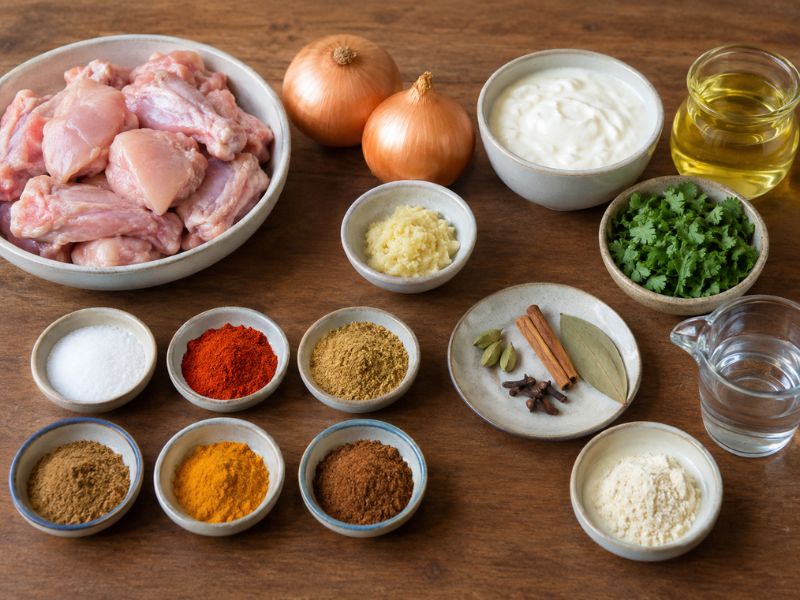
- 900 g chicken pieces
- 2 large onions
- 1 cup plain yogurt
- 3 to 4 tablespoons cooking oil or ghee
- 1 tablespoon ginger-garlic paste
- 1 teaspoon salt
- 1 teaspoon mild red chili powder
- 1 teaspoon coriander powder
- ½ teaspoon cumin powder
- ¼ teaspoon turmeric
- ½ teaspoon garam masala
- 4 green cardamom pods
- 1 small cinnamon stick
- 3 cloves
- 1 bay leaf
- ½ cup water
- Fresh cilantro for serving
Optional Extras
For a more luxurious texture, you may use a little cream or finely ground cashews.
Neither is necessary, though. The basic combination of onions and yogurt can create a wonderfully substantial sauce on its own.
Before Making This Chicken Korma Recipe
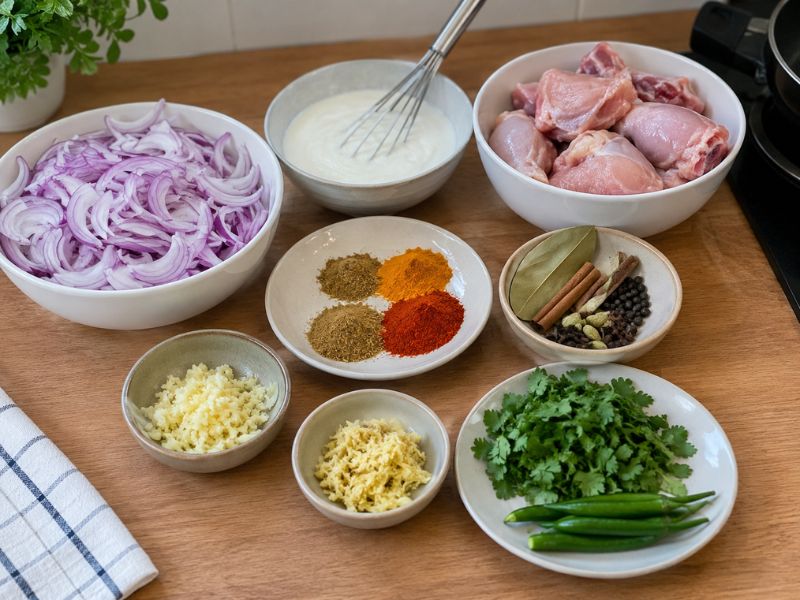
A few minutes of preparation can make the entire recipe easier.
Slice the onions, measure the powdered spices, and whisk the yogurt until it has a uniform consistency.
Keep the whole spices together in a small bowl if possible.
The chicken should also be ready to go before you start cooking. If you enjoy quick and practical meal ideas, you may also like this Can Chicken Salad Recipe for an easy lunch option.
This preparation is especially useful during the onion stage because you will not have to leave the pan unattended while searching for ingredients.
Building Flavor in This Chicken Korma Recipe
Begin With the Onion Base for Chicken Korma
Place a deep pot over medium heat.
Add the oil or ghee and let it warm before introducing the sliced onions.
Now comes the part where patience matters.
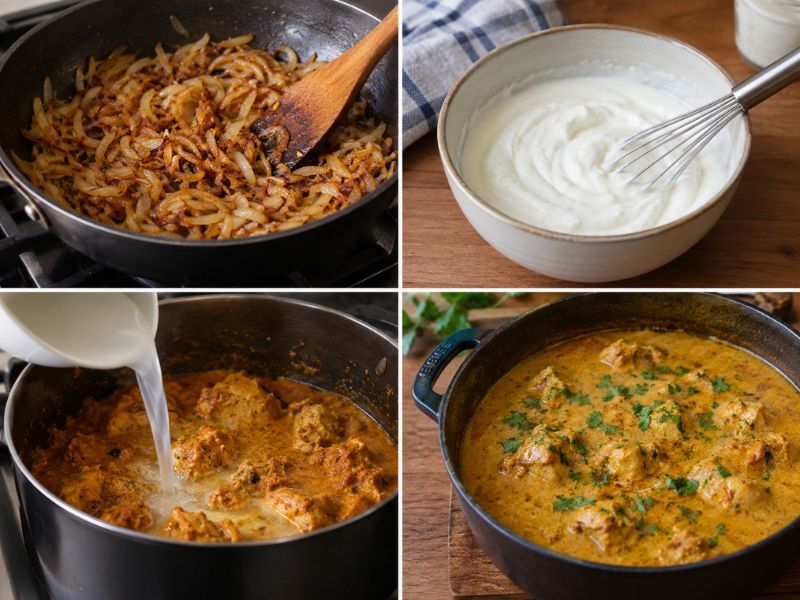
Let the onions cook gradually, stirring them every so often so they color evenly. You are looking for a warm golden-brown appearance.
Once they reach that point, remove about half of the onions and keep them aside.
The remaining onions should stay in the pot.
This simple two-stage use of the onions gives the curry both a flavorful base and a more pronounced onion note later.
Let the Whole Spices Bloom in Chicken Korma
Put the cardamom, cinnamon, cloves, and bay leaf into the hot oil.
Move them around with your spoon and let them heat for a short period.
You should notice their fragrance becoming stronger.
There is no need to fry them for a long time. Their job is simply to release aroma into the cooking fat.
Add the Aromatic Paste to Chicken Korma
Stir the ginger-garlic paste into the pot.
Cook it briefly while keeping it moving.
When the sharp raw smell softens, you are ready for the chicken.
Do not allow the paste to become dark or burnt.
Introducing the Chicken to the Korma
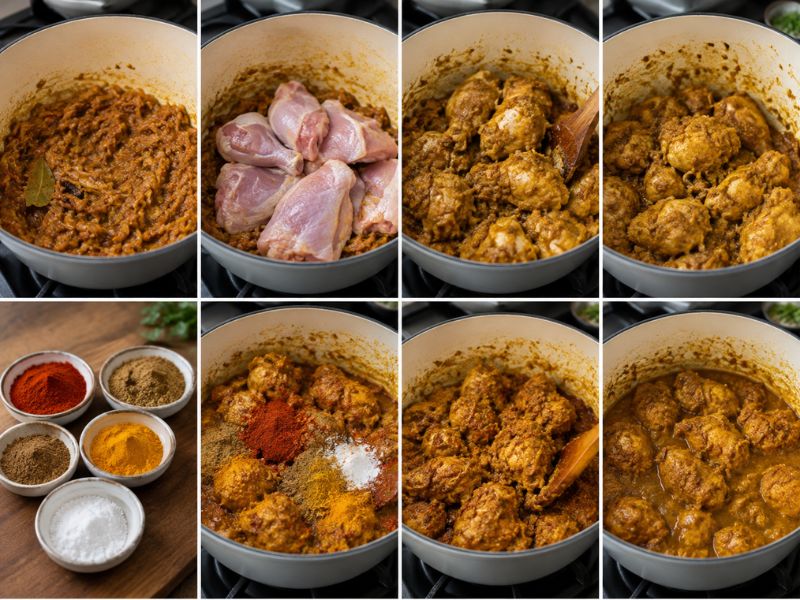
For this chicken korma recipe, add the chicken pieces to the pot and coat them well with the aromatic mixture.
Turn them several times so the onions, infused oil, and aromatic paste coat the meat.
Allow the chicken to cook for a few minutes.
At this stage, it does not need to be fully cooked through. The purpose is to give the meat an initial layer of flavor before the creamy component enters the pot.
Next, add the chili powder, coriander, cumin, turmeric, and salt.
Mix carefully.
The chicken should now be surrounded by a thick, fragrant coating.
If the bottom of the pan becomes dry, add a tablespoon of water and continue stirring.
The Yogurt Technique for Chicken Korma
Yogurt is one of the easiest ingredients to mishandle in a curry.
The trick is simple: do not add it suddenly to an extremely hot pot.
Lower the heat.
Then introduce the yogurt in small portions while stirring the chicken continuously.
Once each portion has blended into the mixture, add a little more.
Continue until the bowl is empty.
The mixture should gradually turn into a smooth, creamy-looking sauce.
If the yogurt is very cold, letting it lose some of its chill before cooking can also help.
Letting the Curry Reach the Right Consistency
Once the yogurt has been incorporated, continue with the chicken korma recipe by adding the water and beginning a gentle simmer.Once the yogurt has been incorporated, pour in the water.
Start with the listed amount rather than adding a large quantity at once.
Cover the pot and allow the chicken to cook gently.
During this time, the meat absorbs the seasoning while the liquid slowly transforms into gravy.
Check the pot from time to time.
If the chicken needs additional cooking but the sauce is drying out, add a small splash of water.
If the chicken is already tender and the gravy seems loose, continue cooking without the lid.
The finished sauce should be thick enough to sit around the chicken rather than behaving like a soup.
Bringing the Reserved Onion Back to Chicken Korma
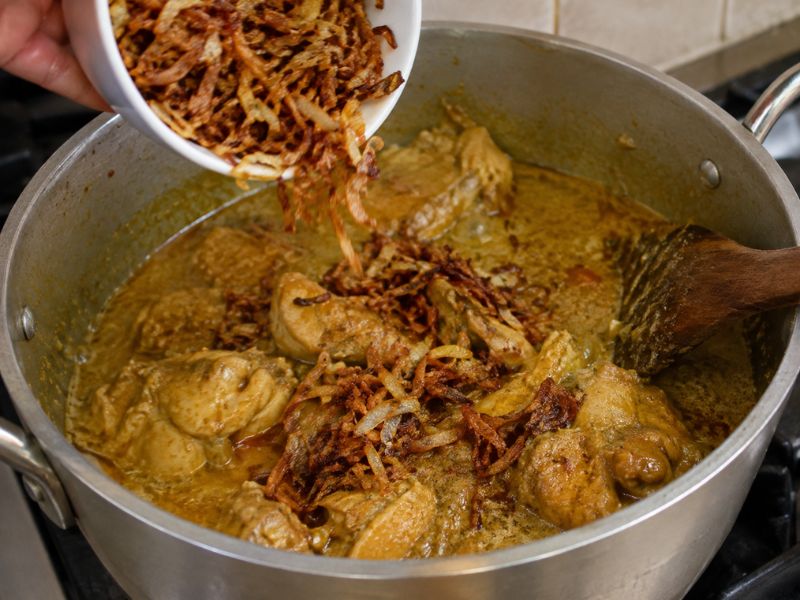
Now take the golden onions you set aside earlier.
Break them into smaller pieces or crush them lightly.
Add them to the pot and stir.
They will soften into the sauce and give the curry another layer of onion flavor.
This is also the stage where the korma begins to develop the fuller taste associated with a slow-cooked curry.
The Final Seasoning
Add the garam masala toward the end rather than cooking it for the entire duration.
Give everything a gentle stir.
Taste a little of the gravy once it is safe to do so.
Adjust the salt if necessary.
If you prefer more heat, add a small amount of chili or sliced green chili.
Once you are happy with the seasoning, turn off the heat.
Scatter chopped cilantro over the top and leave the curry undisturbed for several minutes.
That brief pause is worthwhile because the sauce settles and the flavors become more cohesive.
Small Details That Can Improve the Result
Take Your Time With the Onions
The onions form the backbone of this curry.
They should be cooked until golden and sweet, not simply softened.
However, there is an important difference between deep browning and burning.
Keep the heat moderate and stir regularly.
Choose Unsweetened Yogurt for Chicken Korma
Sweetened yogurt obviously has no place in this recipe.
Use plain yogurt with a natural tang.
If the yogurt is watery, whisking it thoroughly before adding it can help produce a better sauce.
Do Not Add Water Blindly
Every kitchen behaves a little differently.
The size of your pot, the amount of moisture in the chicken, and the thickness of your yogurt can all affect the final consistency.
Therefore, add water gradually and judge the sauce as you cook.
Give the Curry Time
Korma is much more forgiving when you allow the chicken to simmer gently.
Fast cooking may get dinner on the table sooner, but it does not always give the sauce enough time to develop.
What If Something Goes Wrong?
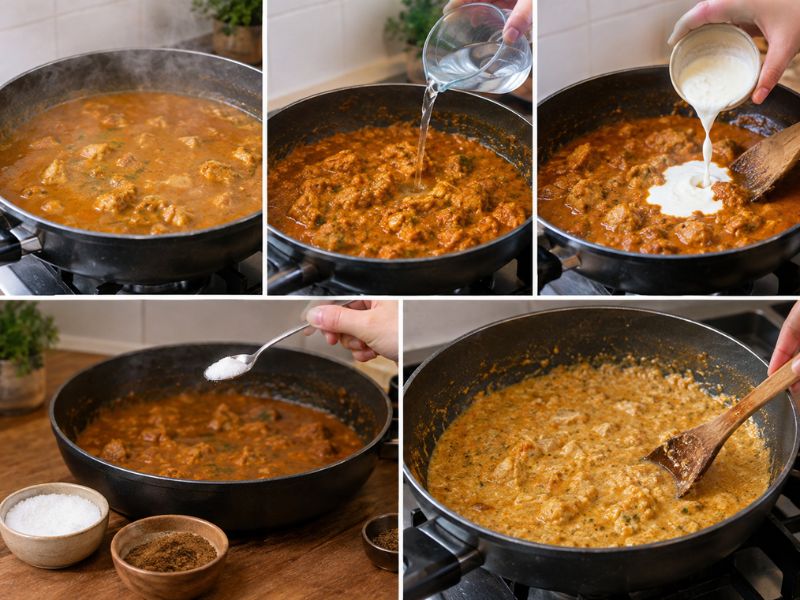
Even experienced home cooks occasionally end up with a curry that needs adjusting.
Fortunately, most problems are easy to handle.
If the Sauce Is Watery
Remove the lid and let the curry simmer gently.
The excess moisture will gradually escape.
If the Gravy Is Too Thick
Add a small amount of warm water.
Stir and reassess before adding more.
If the Curry Is Too Hot
A little additional yogurt can soften the intensity.
You can also add a modest amount of cream if you want a richer finish.
If the Flavor Seems Weak
Check the salt first.
Many curries taste dull simply because they need a little more seasoning.
If the salt is already balanced, a small finishing amount of garam masala may help restore the aroma.
If the Yogurt Looks Grainy
Avoid increasing the heat.
Continue cooking gently and keep the sauce moving occasionally.
The appearance may not become perfectly smooth again, but the flavor can still be enjoyable.
Choosing the Right Chicken
Both bone-in and boneless chicken can be used.
Bone-in pieces tend to contribute more flavor to the sauce and are especially nice when you have enough time for a gentle simmer.
Boneless chicken is convenient and easier to eat, particularly for family dinners.
Whichever option you choose, avoid cutting the pieces too small.
Medium-sized pieces are easier to cook without becoming dry.
How Spicy Should Your Korma Be?
There is no rule saying that korma has to burn your tongue.
In fact, a fragrant, moderately seasoned version often allows the cardamom, cinnamon, and other spices to stand out more clearly.
For a gentle curry, use mild chili powder.
For a hotter plate, introduce fresh green chilies or increase the chili powder little by little.
It is always easier to increase heat than to rescue a curry that has become overwhelmingly spicy.
Ideas for a Creamier Finish
If you enjoy a particularly rich sauce, you have several choices.
A spoonful or two of cream can make the gravy feel more luxurious.
Ground cashews can create thickness without making the curry taste strongly of nuts.
Similarly, almonds can be soaked, blended, and added in a small quantity.
Still, moderation is important.
Too many rich additions can hide the delicate spice profile that makes korma appealing in the first place.
Serving Suggestions for This Chicken Korma Recipe
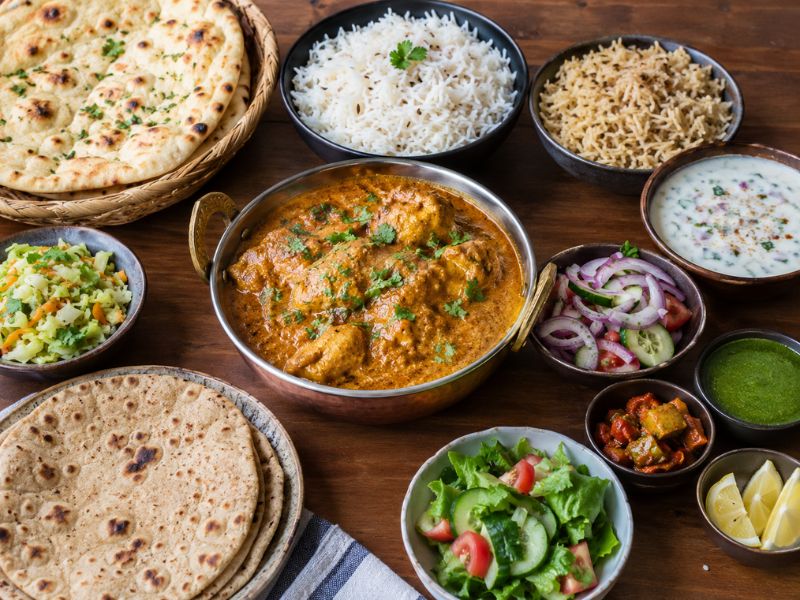
This chicken korma recipe pairs especially well with sides that can carry its rich sauce.
Fresh naan is an excellent match.
Soft roti or chapati also works beautifully for a simpler meal.
If rice is your preference, plain basmati rice keeps things balanced. Jeera rice is another good option when you want additional fragrance.
For a complete spread, consider adding:
- Cucumber raita
- Fresh onion salad
- Mint chutney
- Lemon wedges
- Pickled vegetables
- Simple green salad
The coolness of raita can be especially pleasant beside the warm, aromatic gravy. For another simple vegetable side dish, you can also try this How to Boil Cabbage Recipe for a tender and flavorful addition to your meal.
Making Korma for Guests
This chicken korma recipe is particularly useful when you are cooking for several people.
You can prepare the curry earlier in the day and gently warm it before serving.
That means less work immediately before your guests sit down.
If you are serving it at a gathering, transfer the finished curry into a wide serving dish and garnish it just before bringing it to the table.
Keep the naan or rice warm so everything arrives together.
Storing the Leftovers
Once the meal is finished, place leftover korma in an airtight container.
Refrigerate it promptly and consume it within a few days.
When reheating, use moderate heat.
Because the sauce thickens in the refrigerator, add a spoonful of water if necessary.
Stir gently rather than aggressively breaking apart the chicken pieces.
For the best quality, warm only the amount you plan to eat.
Can You Freeze It?
Yes, korma can be frozen for later use.
Allow it to cool appropriately before transferring it to a freezer-safe container.
Smaller portions are convenient because you can thaw only what you need.
When you are ready to eat it, thaw it safely in the refrigerator and reheat it over gentle heat.
If the sauce has become very thick, loosen it with a little water.
Easy Variations Worth Trying
Mild Korma
Reduce the chili and emphasize the fragrant whole spices.
Nutty Korma
Add a small amount of blended cashew or almond paste.
Cream-Enhanced Korma
Finish the curry with a little cream for a softer, richer sauce.
Green Chili Korma
Add fresh green chilies near the end for a sharper kick.
Lighter Korma
Use a moderate amount of oil and skip cream or nuts while keeping the yogurt-based gravy.
These adjustments let you make the same basic dish feel different each time.
Frequently Asked Questions
1. Can I use boneless chicken in this recipe?
Yes, boneless chicken works well, although it may require less cooking time.
2. Does chicken korma have to contain cream?
No, yogurt and onions can create a rich sauce without adding cream.
3. How can I keep the yogurt from separating?
Lower the heat and incorporate the whisked yogurt gradually while stirring.
4. Which side dish pairs best with korma?
Naan, roti, chapati, and basmati rice are all excellent choices.
5. Can I prepare chicken korma one day ahead?
Yes, storing it overnight can make the flavors even more settled and convenient to serve.
Conclusion
This chicken korma recipe is a great example of how ordinary ingredients can become something genuinely satisfying when they are handled with care. The key is to develop the onion base slowly, let the spices release their aroma, introduce the yogurt gently, and give the chicken enough time to become tender. From there, you can keep the curry simple or make it more luxurious with nuts or cream. Serve it alongside warm naan, soft roti, or fragrant rice, and add a cool raita for contrast. Once you have made it successfully, this versatile curry can easily become one of those dependable recipes you return to whenever you want a meal that feels comforting and special.