
A Spanish recipe doesn’t get more iconic than tortilla española, a golden, creamy-centered potato and onion omelet that is served in homes, tapas bars, and picnic baskets across Spain. Made from just a handful of humble ingredients, this dish proves that simple food, handled with patience and care, can taste extraordinary. In this guide, you’ll learn the exact method, the small details that make the difference, and plenty of ways to serve and customize it.
Why This Is a Spanish Recipe Worth Mastering
Tortilla española is often called the national dish of Spain, and for good reason. It is eaten warm for dinner, cold for lunch, and sliced into small wedges as a tapa. Furthermore, it travels well, keeps for days, and costs very little to make. Few dishes offer that much versatility.
If you enjoy cooking with potatoes, try our easy purple sweet potato recipe for another simple and flavorful homemade side dish.
The origins of the tortilla are debated.
Some food historians believe farming families created it in the early 19th century as an affordable and filling meal. Others credit regional kitchens in Navarre or Extremadura. Regardless of its exact beginnings, the dish has remained remarkably consistent.
You only need eggs, potatoes, onions, olive oil, and salt to prepare this dish.
The great debate, however, is whether onions belong in the recipe. In Spain, the “con cebolla” (with onion) and “sin cebolla” (without onion) camps are fiercely loyal. This version includes onion because it adds natural sweetness and a silkier texture. Nevertheless, you are free to leave it out.
Ingredients for This Spanish Recipe

The ingredient list is short, so quality matters a great deal. Because there is nowhere to hide, each component should be fresh and flavorful. The ingredient list is short, so quality matters a great deal. Because there is nowhere to hide in a Spanish recipe this simple, each component should be fresh and flavorful.
Pantry Staples You Will Need
This recipe serves six as a main course or about twelve as tapas.
- 6 large eggs, preferably free-range, at room temperature
- 500 g (about 1.1 lb) waxy or all-purpose potatoes, such as Yukon Gold
- 1 medium yellow onion, thinly sliced
- 250 ml (1 cup) extra virgin olive oil, for gentle frying
- 1 teaspoon fine sea salt, divided
- Freshly ground black pepper, optional
Optional Flavor Boosters
Although the classic version tastes perfect on its own, you can add several ingredients without compromising its authenticity.
- 1 finely chopped garlic clove for a mild savory note
- A pinch of smoked paprika (pimentón) for warmth
- Fresh parsley, chopped, for a bright finish
- A handful of roasted red peppers for color
Why Potato Choice Matters
Waxy potatoes hold their shape and become tender without turning mushy. Starchy potatoes, such as russets, tend to break down, which produces a softer, more crumbly tortilla.
For the best results, choose Yukon Gold potatoes or another variety with similar qualities.
Equipment You Will Need
Good tools make the process smoother. Fortunately, nothing here is specialized.
- A non-stick or well-seasoned 24–26 cm (9–10 inch) skillet
- A large mixing bowl
- A slotted spoon
- A flat plate or lid slightly larger than the skillet, used for flipping
- A kitchen knife or mandoline slicer to cut the potatoes into thin, equally sized pieces.
A good non-stick skillet is the most important item. Otherwise, the tortilla may stick during flipping, and a broken tortilla is a disappointing sight.
Step-by-Step Instructions for A Spanish Recipe
Patience is the secret ingredient here.
Instead of frying the potatoes quickly, cook them slowly in oil to achieve their signature tender texture.
Step 1: Prepare the Potatoes and Onion
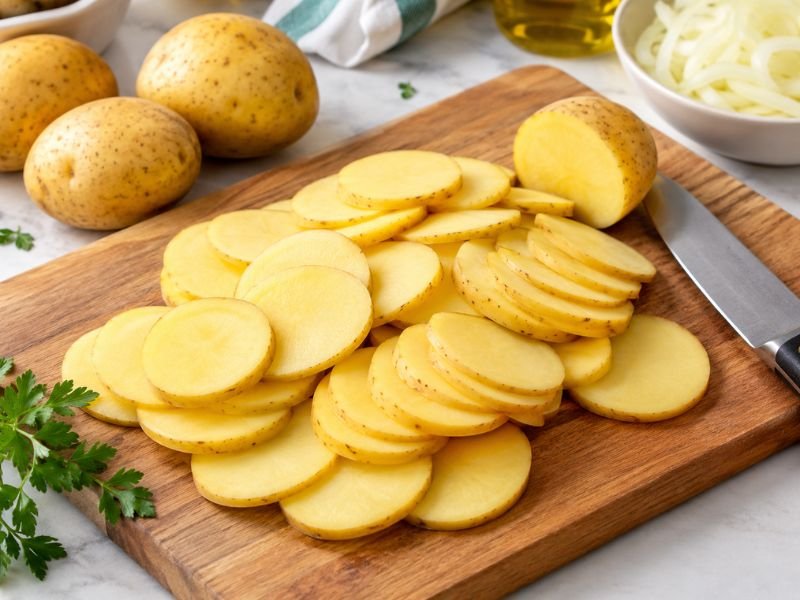
First, peel the potatoes and slice them into thin rounds, about 3 mm (⅛ inch) thick. Next, cut the slices into halves or quarters if they are large. Consistent thickness is essential because it ensures that everything cooks at the same rate.
Cut the onion into very thin slices to ensure even cooking and a balanced flavor. Season the potatoes and onion lightly with half of the salt, and toss them together with your hands.
Step 2: Poach the Vegetables in Olive Oil
Warm the olive oil in a skillet over low to medium heat before adding the ingredients. The oil should be warm, not smoking.
Carefully add the potatoes and onions, ensuring the oil covers most of them.
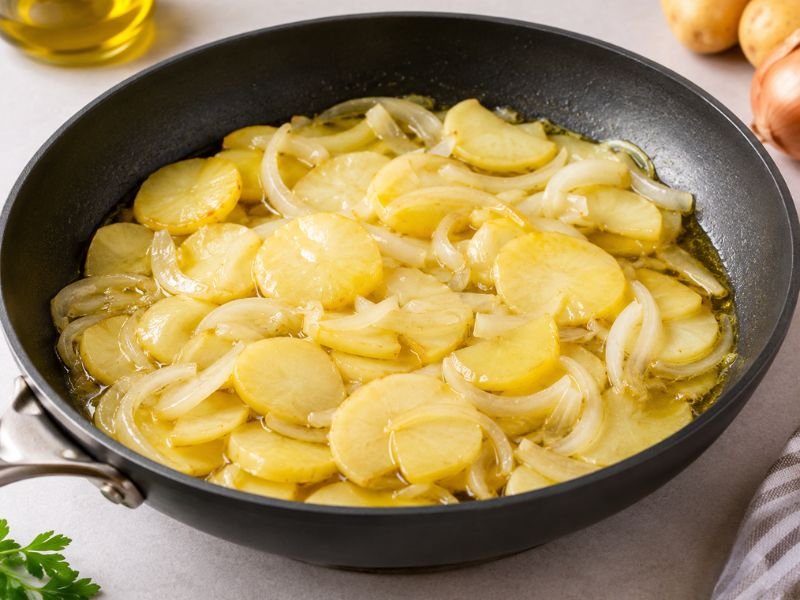
Cook for 20 to 25 minutes, stirring gently every few minutes. The vegetables should soften without browning.Also, keep the heat moderate to prevent the tortilla from developing crispy edges that could affect its soft texture.
When a potato slice breaks easily with the side of a spoon, it is ready.
Step 3: Drain the Mixture
Place a colander over a heatproof bowl and transfer the potatoes and onions into it. Allow the oil to drain for about five minutes.
Strain and save the flavorful oil, then reuse it to cook vegetables or eggs.
Step 4: Beat the Eggs and Combine
While the potatoes drain, crack the eggs into a large bowl.
Whisk the eggs with the remaining salt and a pinch of pepper until the yolks and whites blend smoothly. Then fold in the warm potato and onion mixture gently.
Let the mixture sit for 10 minutes so the eggs can soak into the potatoes and create a cohesive, custard-like center.

Step 5: Cook the First Side
Return the skillet to the stove and add one tablespoon of the reserved oil. Heat it over medium heat, and then pour in the egg and potato mixture.
Spread the mixture evenly across the pan, then use a spatula to shape the edges into a neat, rounded tortilla.
Cook for about 4 to 5 minutes, shaking the pan occasionally. The edges should look set, while the center should still be slightly wobbly.
Step 6: Flip with Confidence
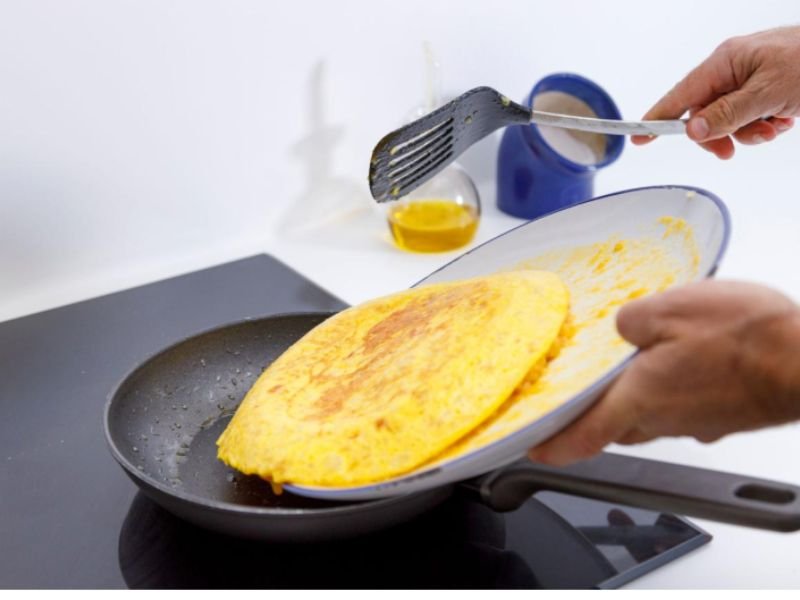
This is the moment that makes many cooks nervous.Still, preparing it is simpler than you might expect. Place a large flat plate over the skillet, and hold it firmly. Next, invert the pan in a single smooth motion so the tortilla lands on the plate.
Add another teaspoon of oil to the skillet, and slide the tortilla back in, uncooked side down. Tuck the edges again, and cook for 3 to 4 minutes more.
For a juicy, creamy center, cook the tortilla for less time, as many regions traditionally prefer it this way.
Step 7: Rest Before Serving
Slide the tortilla onto a clean plate and let it rest for at least 10 minutes. Resting helps the structure firm up, so that slices are cut cleanly. Serve it warm, at room temperature, or chilled.
Pro Tips for Perfecting a Spanish Recipe
Even a simple dish has its small secrets. These tips, which come from years of kitchen testing, will help you avoid common pitfalls.
If you enjoy simple homemade meals, explore our quick recipes for busy people for more easy meal ideas to add to your weekly menu.
- Use enough oil.
Although the oil may seem excessive, you can drain off most of it after cooking. Too little oil leads to fried, crisp potatoes rather than tender ones. - Keep the heat low. Browning is not the goal during the poaching stage.
- Do not skip the resting time. The flavors and texture improve noticeably.
- Choose the right pan size. A pan that is too large produces a thin, dry tortilla, while one that is too small makes flipping difficult.
- Season in layers.
Season both the potatoes and eggs with salt to distribute the flavor evenly throughout the tortilla.
Troubleshooting Common Problems
If your tortilla is falling apart, the potatoes were probably cut too thick or the mixture was not rested. If it is rubbery, the heat was likely too high or the eggs were overcooked. Meanwhile, a greasy result usually means the potatoes were not drained properly.
Delicious Variations of A Spanish Recipe
Once the classic version feels comfortable, experimentation becomes easy. Spanish cooks themselves often adapt the dish depending on the season and what is available.
- Chorizo tortilla: Add thin slices of cured chorizo for a smoky, savory twist.
- Spinach and goat cheese: Fold in wilted spinach and crumbled cheese for a lighter, greener option.
- Zucchini tortilla: Replace half of the potatoes with thin zucchini slices.
- Jamón and pepper: Mix in diced Serrano ham and roasted peppers for a tapas-bar flavor.
- Mushroom and thyme: Sautéed mushrooms bring earthy depth that pairs beautifully with the eggs.
Each of these changes can be made while keeping the technique exactly the same.
What to Serve with Tortilla Española

Tortilla is wonderfully flexible, and therefore it fits into many menus. In Spain, it is commonly presented as part of a tapas spread, accompanied by several small dishes.
For a complete meal, consider these pairings:
- A crisp green salad with sherry vinaigrette
- Crusty bread rubbed with ripe tomato (pan con tomate)
- Marinated olives and Manchego cheese
- Garlic shrimp or sautéed padrón peppers
- A glass of dry white wine, chilled cider, or light red wine
Additionally, a dollop of garlicky aioli on the side is a popular and delicious touch. Sandwiched inside a baguette, the tortilla also becomes a classic “bocadillo de tortilla,” which is ideal for picnics and lunchboxes.
Storage and Make-Ahead Advice
One of the best things about this dish is how well it keeps. Consequently, it suits busy schedules and entertaining alike.
- Refrigerator: Wrap the cooled tortilla tightly, and store it for up to three days.
- Serving leftovers: Bring it to room temperature for about 20 minutes before eating, because the flavor is fuller when it is not ice-cold.
- Freezing: Although it can be frozen in slices for up to a month, the texture of the potatoes may soften slightly after thawing.
- Reheating: If you prefer it warm, heat slices gently in a low oven or a covered skillet.
Nutrition and Dietary Notes
Tortilla española is naturally gluten-free and vegetarian, which makes it welcoming for many guests. It also provides protein from the eggs, energy from the potatoes, and heart-healthy fats from the olive oil. However, it is fairly rich, so moderate portions are recommended, especially when it is served alongside other tapas.
A typical serving, which is one-sixth of the tortilla, contains roughly 300 to 350 calories. Values vary depending on how much oil is absorbed, so draining well is helpful. Anyone watching fat intake can reduce the oil slightly and use a non-stick pan, although the texture will be a little different.
Final Thoughts
A Spanish recipe like tortilla española shows how a few inexpensive ingredients can become something deeply satisfying when they are treated with patience, good olive oil, and a little confidence at the flip. Once you master the slow poaching, the gentle resting, and the quick turn of the pan, you’ll have a reliable dish that works for breakfast, lunch, dinner, or a lively tapas night. Make it once, and it will almost certainly become a permanent part of your kitchen routine.
Frequently Asked Questions (FAQs)
- Can I make tortilla española without onions? Yes, simply omit the onion and follow the same steps for a classic “sin cebolla” version.
- What is the best pan for flipping a Spanish tortilla? A 24–26 cm non-stick skillet with sloped sides is easiest to use and prevents sticking.
- Should the center of the tortilla be runny? Traditionally it is soft and creamy, but you can cook it longer if you prefer it fully set.
- Can I use a different oil instead of olive oil? Yes, though extra virgin olive oil gives the most authentic flavor and texture.
- How long does tortilla española last in the fridge? It stays fresh for up to three days when