
Looking for an easy how to make bread without yeast recipe? You can make a warm, homemade loaf with simple pantry ingredients—no yeast, long kneading, or hours of waiting for the dough to rise. This quick recipe uses baking powder to give the bread its lift, making it a great option when you’re short on time or simply don’t have yeast at home.
This recipe for bread without yeast recipe is a simple alternative to traditional yeast bread. Instead of yeast, the dough relies mainly on baking powder for lift, so there is no proofing, kneading for a long time, or waiting for the dough to double in size.
The result is different from classic sandwich bread. It is slightly denser, tender inside, and wonderfully satisfying when served warm. However, when you use the right ingredient ratios and avoid overmixing, the loaf can still have a soft and pleasant texture.
Why Choose a Bread Without Yeast?
There are several good reasons to skip yeast when making homemade bread.
First, yeast-free bread saves time. Traditional yeast dough usually needs at least one rising period, and some recipes require two. By contrast, a baking-powder loaf can go from mixing bowl to oven almost immediately.
Additionally, this method is useful when you don’t have yeast available. Maybe the packet in your cupboard expired, or perhaps you simply forgot to buy some. Fortunately, baking powder can provide enough lift for a quick homemade loaf.
This recipe can also be helpful for beginner bakers. There is no need to worry about activating yeast, checking water temperature, or wondering whether the dough has risen enough.
How Does Yeast-Free Bread Rise?
The main leavening agent is baking powder. When it becomes wet and is exposed to heat, it produces carbon dioxide gas. Those tiny bubbles expand inside the dough, helping the bread become lighter.
Some versions also use baking soda, particularly when an acidic ingredient such as buttermilk or yogurt is included. However, baking powder alone is enough for the basic recipe below.
Essential Ingredients for Yeast-Free Bread
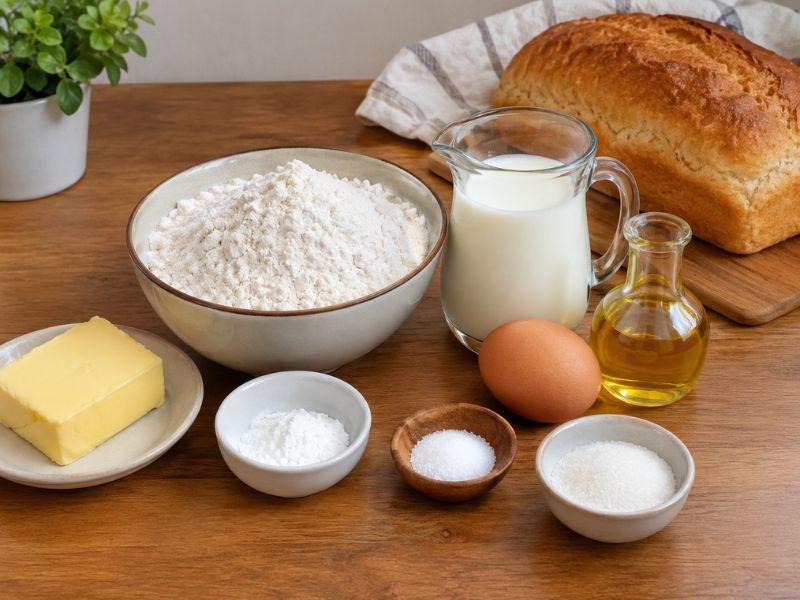
You only need a handful of everyday ingredients.
All-Purpose Flour
All-purpose flour works especially well because it gives the loaf enough structure without making it excessively chewy.
Measure the flour carefully. Too much flour can make the dough dry and heavy, while too little can leave it difficult to shape.
Baking Powder
Baking powder is the key ingredient replacing yeast. Make sure yours is reasonably fresh because old baking powder may not provide enough lift.
Salt
Salt adds flavor and keeps the bread from tasting flat. Even though the amount is small, don’t leave it out unless you have a specific dietary reason.
Milk
Milk makes the bread softer and gives it a slightly richer flavor. You can use whole milk, low-fat milk, or a suitable dairy-free alternative.
Butter or Oil
A little fat improves the texture and keeps the loaf from becoming too dry. Melted butter gives a richer taste, while neutral oil produces a lighter flavor.
Optional Sugar
A small amount of sugar adds mild sweetness and can help with browning. Nevertheless, you can leave it out if you prefer savory bread.
Quick Bread Without Yeast Recipe
If you’re looking for a simple how to make bread without yeast recipe, this quick version is easy to prepare with everyday ingredients and requires no rising time.
Prep time: 10–15 minutes
Bake time: 30–40 minutes
Total time: About 45–55 minutes
Yield: 1 small loaf
Oven temperature: 375°F (190°C)
Ingredients
- 2 cups all-purpose flour
- 1 tablespoon baking powder
- ½ teaspoon salt
- 1 tablespoon sugar, optional
- ¾ cup milk
- 3 tablespoons melted butter or neutral oil
- 1 large egg, optional
The egg is optional, but adding one can make the loaf richer and slightly more tender.
Step-by-Step Yeast-Free Bread Baking Method
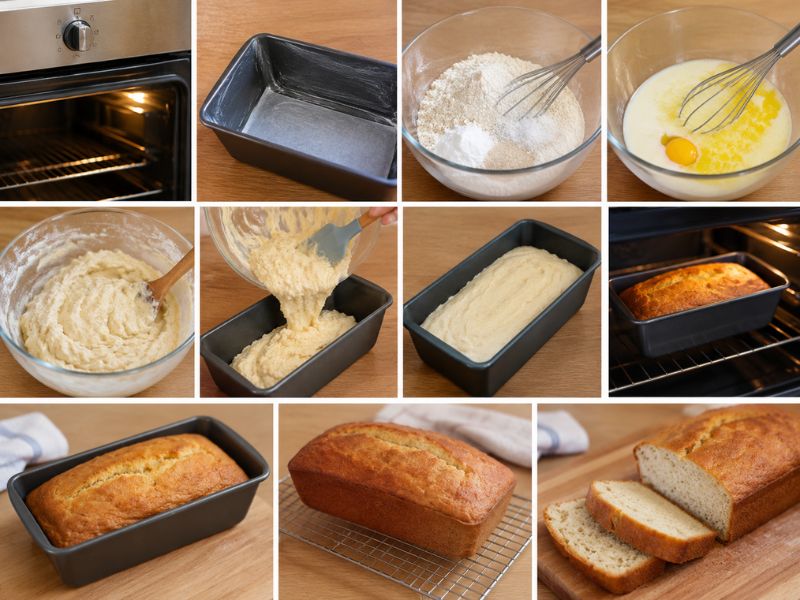
This how to make bread without yeast recipe comes together quickly, so have all your ingredients measured before you start.
1. Prepare the Oven for Yeast-Free Bread
Start by preheating your oven to 375°F (190°C).
Meanwhile, lightly grease a small loaf pan. You can also line the bottom with parchment paper to make removing the finished bread easier.
Don’t skip preheating. Quick breads depend on immediate heat to activate the leavening and set the structure properly.
2. Mix the Dry Ingredients for Yeast-Free Bread
Add the flour, baking powder, salt, and optional sugar to a large mixing bowl.
Whisk everything together until evenly distributed. This step is important because it prevents pockets of baking powder or salt from remaining in the finished loaf.
3. Combine the Wet Ingredients
In another bowl, combine the milk with melted butter or oil.
If you’re using an egg, whisk it into the wet mixture as well. Make sure melted butter has cooled slightly before adding the egg so it doesn’t accidentally cook it.
4. Bring the Dough Together
Pour the wet mixture into the bowl containing the dry ingredients.
Using a wooden spoon or spatula, stir gently until the flour is just absorbed. The dough should look soft and slightly thick.
However, don’t keep stirring just because you see a few small lumps. Overmixing develops gluten and can turn a quick bread tough.
5. Transfer the Dough to the Pan
Spoon the dough into your prepared loaf pan.
Smooth the top gently with a spatula or the back of a spoon. If you like, brush a little melted butter over the surface for a more golden crust.
6. Bake Until Golden
Place the pan in the preheated oven and bake for approximately 30–40 minutes.
The exact baking time depends on your oven and the size of your pan. Start checking near the 30-minute mark.
The loaf should look golden on top, and a toothpick inserted into the center should come out clean or with only a few moist crumbs.
7. Let It Cool
Once baked, remove the loaf from the oven and allow it to rest in the pan for around 10 minutes.
Afterward, transfer it to a wire rack and let it cool further before slicing.
It can be tempting to cut into it immediately. Still, allowing the bread to settle helps the inside finish setting and makes cleaner slices.
How to Get Softer Yeast-Free Bread
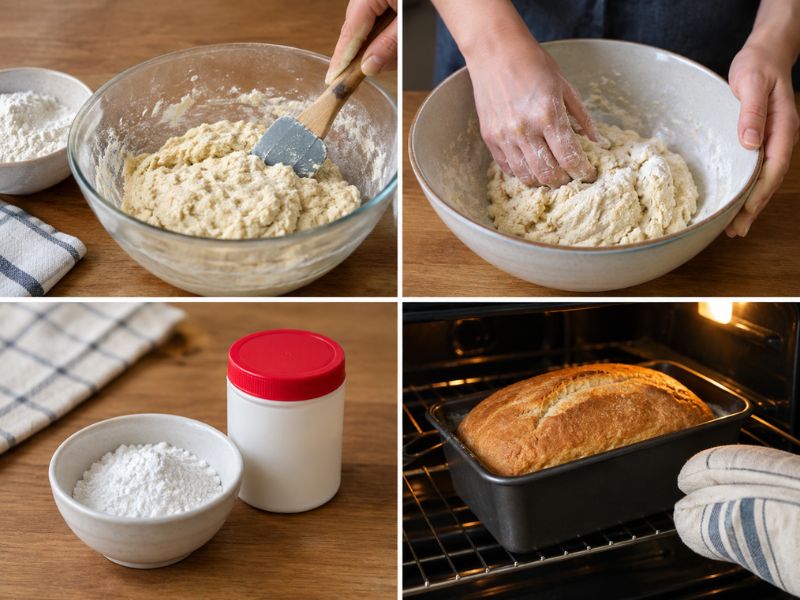
Yeast-free bread naturally has a different crumb from traditional yeast bread. Even so, a few simple tricks can make a noticeable difference.
Don’t Add Too Much Flour
This is one of the most common mistakes.
If the dough looks slightly sticky, don’t immediately add several spoonfuls of flour. A little moisture is helpful because too much flour creates a heavy loaf.
Avoid Overmixing
Mix only until the ingredients come together.
Once there are no large patches of dry flour, stop mixing. The less you work the dough, the more tender the final texture will usually be.
Use Fresh Baking Powder
Fresh baking powder gives the loaf the best chance of rising properly.
If your baking powder has been sitting in the cupboard for a very long time, its strength may have decreased. As a result, your bread could turn out flatter and heavier.
Don’t Overbake
Overbaking removes moisture from the loaf.
Therefore, begin checking the bread before the maximum suggested baking time. Once the center is cooked and the top is nicely browned, take it out.
Can You Use Baking Soda in Yeast-Free Bread?
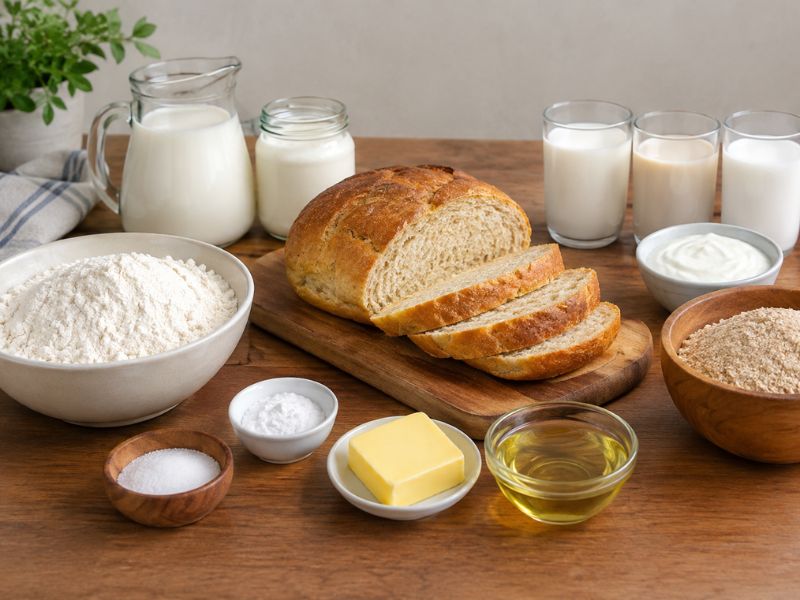
Yes, but baking soda works best when paired with an acidic ingredient.
For example, you can use buttermilk or plain yogurt in a modified recipe. The acid reacts with baking soda and produces carbon dioxide, which helps the bread rise.
However, don’t simply replace baking powder with an equal amount of baking soda. They don’t work in exactly the same way, and too much baking soda can leave a bitter or soapy taste.
For the easiest version, stick with baking powder.
Ingredient Substitutions for Yeast-Free Bread
This recipe is flexible, so you can adapt it based on what you have at home.
Milk Alternatives
You can replace regular milk with:
- Unsweetened almond milk
- Soy milk
- Oat milk
- Buttermilk
- Plain yogurt diluted with a little water
Buttermilk can add a pleasant tang and a softer crumb.
Butter Alternatives
Use vegetable oil, sunflower oil, canola oil, or another mild-flavored oil.
For a richer loaf, melted butter is usually the better choice.
Flour Options
All-purpose flour is the safest option. You can replace part of it with whole wheat flour, but don’t substitute the entire amount unless you’re prepared for a denser loaf.
For example, try replacing about ½ cup of all-purpose flour with whole wheat flour. The bread will have a nuttier flavor and slightly heavier texture.
Why Is My Bread Without Yeast Dense?
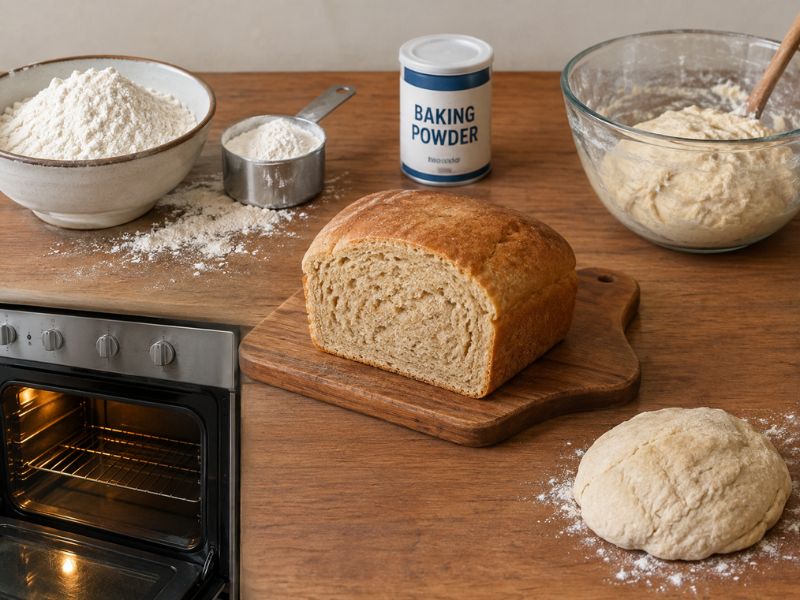
Even with an easy how to make bread without yeast recipe, a few small mistakes can lead to a dense or heavy loaf.
A dense loaf is probably the most common problem with quick homemade bread.
Usually, one of several things has happened.
Too Much Flour
Adding extra flour makes the dough heavy. Always measure flour carefully rather than repeatedly adding it until the dough feels like traditional bread dough.
Old Baking Powder
If the leavening agent isn’t active enough, the loaf won’t rise properly.
Therefore, check the freshness of your baking powder if your bread consistently comes out flat.
Overmixing
Stirring the dough too much can create a tougher texture.
Once the ingredients are combined, stop mixing.
Oven Temperature Was Too Low
If the oven isn’t fully heated when the bread goes in, the leavening may not work as effectively.
For that reason, preheat the oven completely before baking.
The Dough Was Too Dry
A dry dough usually creates a dry, heavy loaf.
If your mixture looks extremely stiff before baking, you may have added too much flour. A soft dough is preferable for this style of bread.
How to Know When Your Yeast-Free Bread Is Done
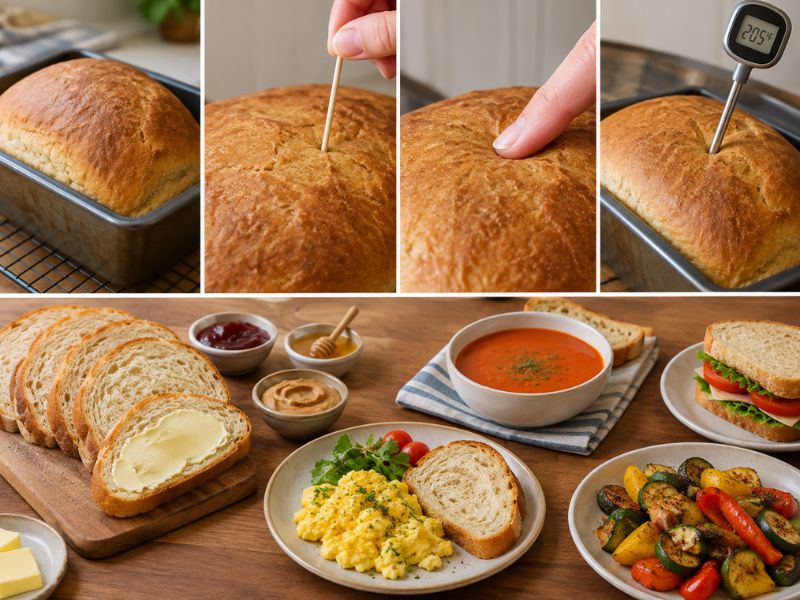
There are several ways to check.
First, look at the surface. It should be golden brown and firm.
Next, insert a toothpick or thin skewer into the center. If it comes out clean or with a few moist crumbs, the bread is generally ready.
You can also gently press the center with your finger. A properly baked loaf should spring back slightly rather than feeling wet or sunken.
If you have a kitchen thermometer, the center should be around 200–210°F (93–99°C) when fully baked.
Delicious Ways to Serve Yeast-Free Bread
Fresh yeast-free bread is incredibly versatile.
For breakfast, serve warm slices with butter, jam, honey, or peanut butter.
For a savory option, try it with:
You can also serve it alongside easy Swedish recipes at home for a cozy Scandinavian-inspired meal.
- Scrambled eggs
- Cheese
- Cream cheese
- Avocado
- Soup
- Grilled vegetables
- Chicken salad
- Mashed potatoes
You can also toast leftover slices and serve them with a creamy ham salad recipe for an easy lunch.
Meanwhile, a warm slice with butter alongside tomato soup or creamy vegetable soup makes an easy and comforting meal.
Flavor Variations for Bread Without Yeast
Once you’ve made the basic loaf, you can easily change the flavor.
Garlic Herb Bread
Add minced garlic along with dried oregano, parsley, rosemary, or Italian seasoning.
A little grated cheese on top also works beautifully.
Cheesy Bread
Fold shredded cheddar, mozzarella, or another melting cheese into the dough.
Additionally, sprinkle a little cheese over the top before baking for a golden crust.
Honey Bread
Replace the sugar with honey for a slightly softer, naturally sweet loaf.
This version works especially well for breakfast.
Spicy Bread
For a savory loaf with some heat, add chopped jalapeños, chili flakes, or finely diced green chilies.
Just be careful not to add too many wet ingredients because they can change the dough consistency.
How to Store Homemade Bread
Allow the bread to cool completely before storing it.
Wrap it tightly in plastic wrap, foil, or place it in an airtight container. At room temperature, it is best enjoyed within 2–3 days for the freshest texture.
If you won’t eat the whole loaf quickly, freezing is a better option.
Freezing Instructions
Slice the cooled bread before freezing. Then place the slices in a freezer-safe bag or airtight container, separating them with parchment paper if desired.
The bread can generally be frozen for around 2–3 months.
When you want some, take out individual slices and allow them to thaw at room temperature or warm them gently in a toaster or oven.
Can You Make This Bread Ahead?
Yes. This recipe is actually convenient for meal planning because there is no yeast fermentation involved.
You can bake the loaf earlier in the day and serve it later. For the best texture, store it properly once completely cooled.
However, the dough itself is not ideal for sitting around for hours before baking. Baking powder begins reacting once liquid is introduced, so it’s better to mix and bake the dough promptly.
Tips for the Best Results
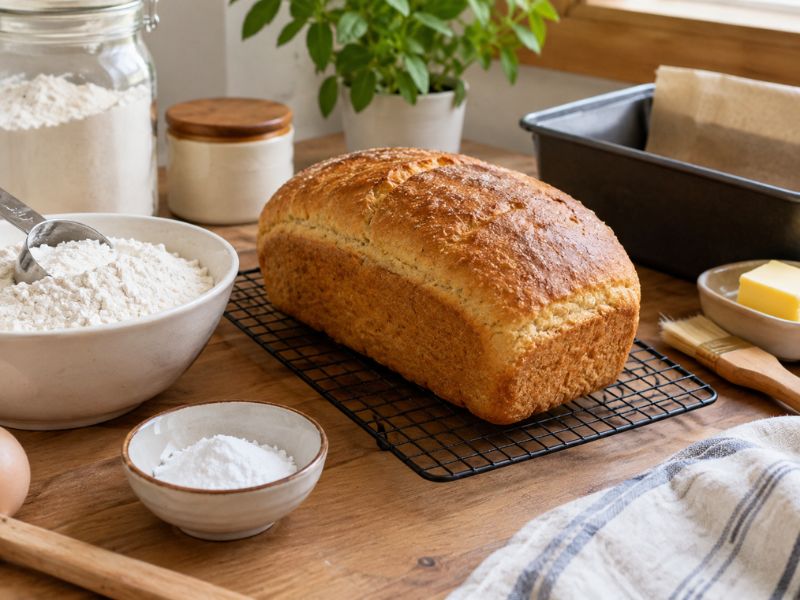
Keep these simple points in mind the next time you bake it:
- Measure the flour accurately.
- Use fresh baking powder.
- Preheat the oven completely.
- Don’t overmix the dough.
- Keep the dough reasonably soft.
- Avoid adding unnecessary flour.
- Don’t overbake the loaf.
- Let the bread cool before slicing.
- Use parchment paper if your pan tends to stick.
- Brush the top with butter for a richer crust.
Frequently Asked Questions
Here are some common questions readers may have when trying this how to make bread without yeast recipe for the first time.
Can I make bread without yeast and without eggs?
Yes. The egg is optional in this recipe. You can leave it out and slightly adjust the liquid if necessary to maintain a soft dough.
Is bread without yeast the same as normal bread?
Not exactly. Traditional yeast bread usually has a lighter, chewier structure because fermentation develops both flavor and texture. Yeast-free bread is quicker and generally has a more tender, cake-like or biscuit-like crumb.
Can I use whole wheat flour?
Yes, but expect a denser loaf. For a softer result, start by replacing only part of the all-purpose flour with whole wheat flour.
Why is my bread crumbly?
The dough may have been too dry, or the loaf may have been overbaked. Next time, avoid adding excessive flour and check the bread earlier.
Can I add cheese and herbs?
Absolutely. Cheese, garlic, rosemary, parsley, oregano, and chili flakes can all work well. Just avoid adding so many extras that the dough becomes overly wet or difficult to hold together.
Final Thoughts
Making homemade bread doesn’t always have to involve yeast, long kneading sessions, or hours of waiting. With a few simple ingredients and the right technique, you can have a fresh loaf ready surprisingly quickly.
The most important things are keeping the dough moist enough, mixing it gently, using fresh baking powder, and watching the baking time carefully. Once you get comfortable with the basic recipe, you can experiment with cheese, herbs, garlic, honey, or spices to create your own favorite version.