
Learning how to make mascarpone recipes at home is easier than many people think. With just a few ingredients and some patience, you can create fresh mascarpone that tastes amazing and works beautifully in a variety of recipes. Moreover, homemade mascarpone is a skill worth adding to your kitchen repertoire. If you enjoy preparing natural ingredients from scratch, you may also like our How to Make Oil of Oregano Recipe. Whether you’re an experienced cook or a beginner, homemade mascarpone is a skill worth adding to your kitchen repertoire.
If you’ve ever enjoyed a rich tiramisu, a creamy cheesecake filling, or a luxurious pasta sauce, there’s a good chance mascarpone cheese played a major role in creating that silky texture. This Italian cheese is known for its smooth consistency and mild flavor, making it a favorite ingredient in both sweet and savory dishes.
What Is Mascarpone Cheese in Homemade Mascarpone Recipes?
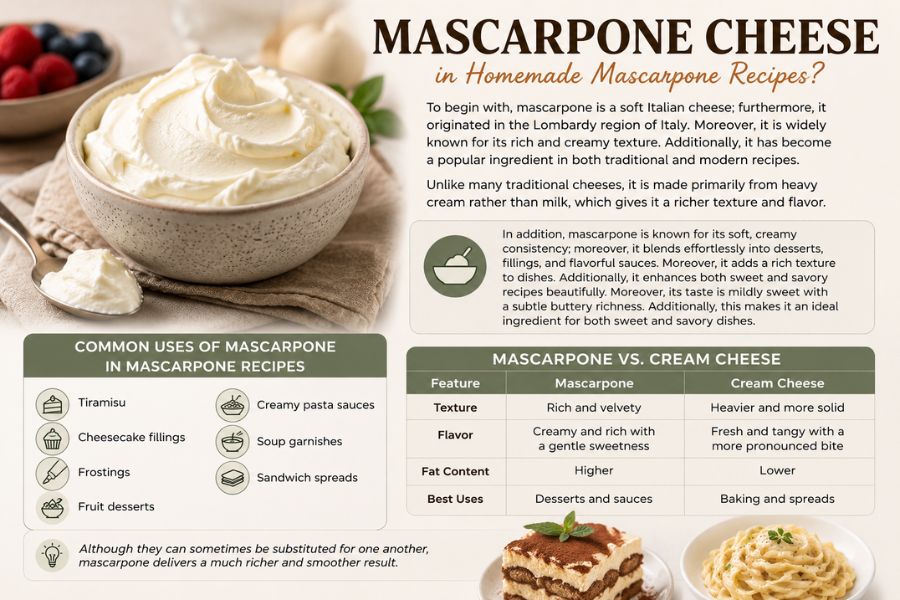
To begin with, mascarpone is a soft Italian cheese; furthermore, it originated in the Lombardy region of Italy. Moreover, it is widely known for its rich and creamy texture. Additionally, it has become a popular ingredient in both traditional and modern recipes. Unlike many traditional cheeses, it is made primarily from heavy cream rather than milk, which gives it a richer texture and flavor.
In addition, mascarpone is known for its soft, creamy consistency; moreover, it blends effortlessly into desserts, fillings, and flavorful sauces. Moreover, it adds a rich texture to dishes. Additionally, it enhances both sweet and savory recipes beautifully. Moreover, its taste is mildly sweet with a subtle buttery richness. Additionally, this makes it an ideal ingredient for both sweet and savory dishes.
Common Uses of Mascarpone in Mascarpone Recipes
- Tiramisu
- Cheesecake fillings
- Frostings
- Fruit desserts
- Creamy pasta sauces
- Soup garnishes
- Sandwich spreads
Mascarpone vs. Cream Cheese
| Feature | Mascarpone | Cream Cheese |
| Texture | Rich and velvety | Heavier and more solid |
| Flavor | Creamy and rich with a gentle sweetness | Fresh and tangy with a more pronounced bite |
| Fat Content | Higher | Lower |
| Best Uses | Desserts and sauces | Baking and spreads |
Although they can sometimes be substituted for one another, mascarpone delivers a much richer and smoother result.
Why Make Mascarpone Recipes at Home?
Additionally, making mascarpone at home offers several advantages beyond saving a trip to the grocery store; furthermore, it gives you greater control over ingredients and freshness.
Fresher Flavor in Mascarpone Recipes
Freshly made mascarpone often has a cleaner, creamier taste than store-bought versions.
Cost Savings in Mascarpone Recipes
Premium mascarpone can be expensive. Preparing it yourself may help reduce overall costs, especially if you use it regularly.
Control Over Ingredients in Mascarpone Recipes
Moreover, homemade mascarpone contains only a few ingredients; Likewise, if you enjoy making natural kitchen staples at home, our How to Make Oil of Oregano Recipe is another easy homemade guide worth trying. therefore, it allows you to avoid unnecessary additives and preservatives while also giving you greater control over quality.
Endless Versatility in Mascarpone Recipes
Indeed, once prepared, mascarpone can be transformed into countless sweet and savory dishes; moreover, it is one of the most versatile and convenient ingredients in your kitchen.
Ingredients Needed for Basic Homemade Mascarpone Recipes
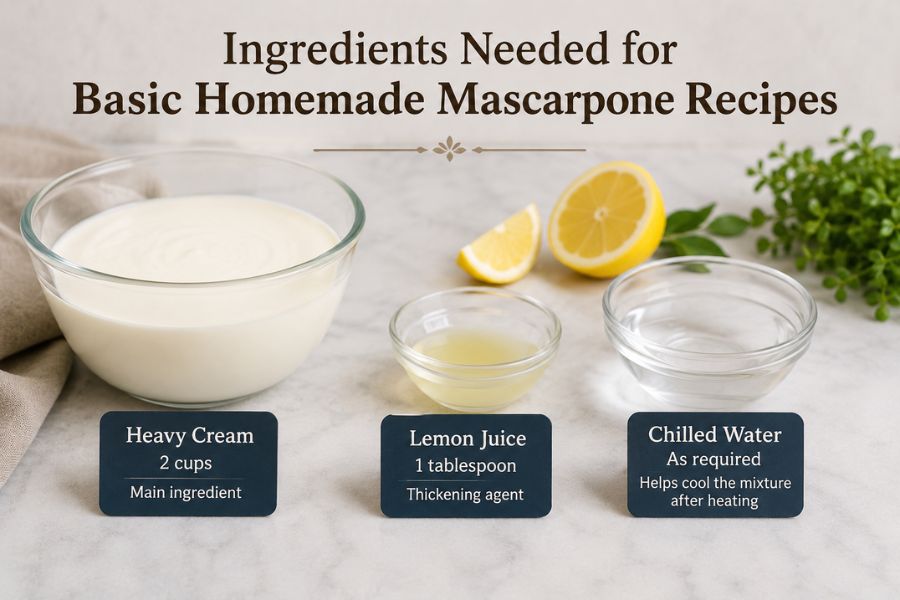
| Ingredient | Quantity | Purpose |
| Heavy Cream | 2 cups | Main ingredient |
| Lemon Juice | 1 tablespoon | Thickening agent |
| Chilled Water | As required | Helps cool the mixture after heating |
Firstly, for a richer texture and better flavor, start with fresh, high-quality heavy cream; moreover, it significantly improves the final result.For a richer texture and better flavor, start with fresh, high-quality heavy cream.
Essential Kitchen Tools for Mascarpone Recipes
| Tool | Why It Is Needed |
| Saucepan | For heating cream |
| Thermometer | Helps monitor temperature |
| Whisk | Helps combine ingredients smoothly and evenly |
| Fine Mesh Strainer | Removes excess liquid |
| Cheesecloth | Helps create smooth texture |
| Mixing Bowl | Holds strained mascarpone |
| Storage Container | Keeps mascarpone fresh |
How to Make Mascarpone Recipes: Prepare Creamy Homemade Mascarpone from Scratch
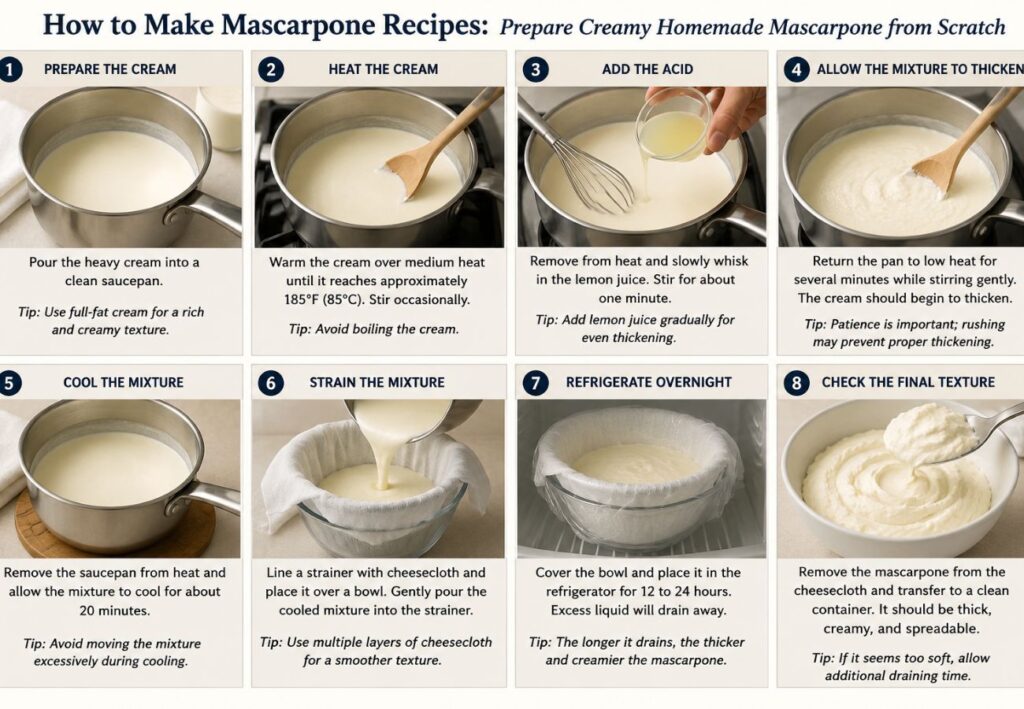
1. Prepare the Cream
Firstly, pour the heavy cream into a clean saucepan, and then prepare it for heating.
Tip: In addition, use full-fat cream for a rich and creamy texture; furthermore, it helps achieve a more stable consistency.
2. Heat the Cream
Warm the cream over medium heat until it reaches approximately 185°F (85°C).
Stir occasionally to prevent scorching.
Tip: Avoid boiling the cream because it may affect the final consistency.
3. Add the Acid
Next, remove the saucepan from direct heat and then slowly whisk in the lemon juice.
Then, continue stirring for about one minute; meanwhile, ensure the mixture stays smooth and consistent.
Tip: Furthermore, add the lemon juice gradually; meanwhile, ensure even thickening throughout the mixture.
4. Allow the Mixture to Thicken
Return the pan to low heat for several minutes while stirring gently.
At this stage, the cream should begin to thicken slightly; moreover, this indicates that the process is working correctly.
Tip: Therefore, patience is important; otherwise, rushing this stage may prevent proper thickening.
5. Cool the Mixture
Then, remove the saucepan from heat and subsequently allow the mixture to cool for about 20 minutes.
Tip: Avoid moving the mixture excessively during cooling.
6. Strain the Mixture
Next, carefully line a strainer with cheesecloth and then place it over a bowl.
Afterward, gently pour the cooled mixture into the lined strainer; meanwhile, ensure it is evenly distributed for proper draining.
Tip: To achieve a better result, use multiple layers of cheesecloth; furthermore, this helps ensure a smoother texture.
7. Refrigerate Overnight
Afterward, cover the bowl and then place it in the refrigerator for 12 to 24 hours.
During this time, excess liquid will drain away.
Tip:Additionally, the longer it drains, the thicker the mascarpone becomes; consequently, its texture becomes richer and creamier.
8. Check the Final Texture
Finally, remove the mascarpone from the cheesecloth and then transfer it to a clean container.
At this stage, the finished cheese should be thick, creamy, and spreadable; moreover, it should have a smooth texture.
Tip: If it seems too soft, allow additional draining time.
Tips for Perfect Homemade Mascarpone in Mascarpone Recipes
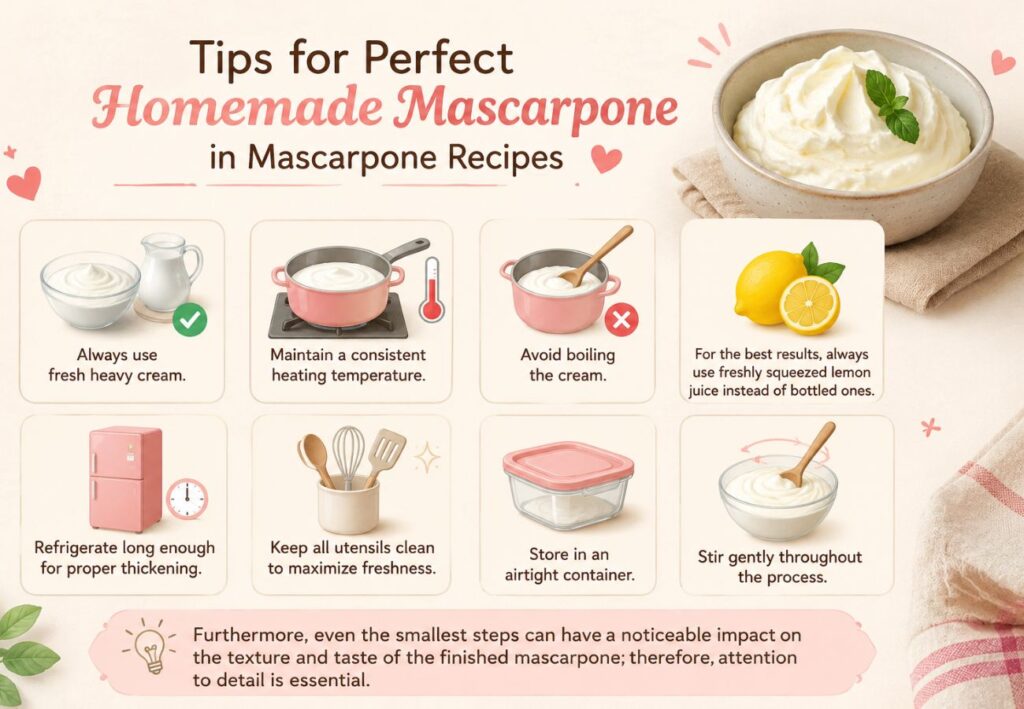
- Always use fresh heavy cream.
- Maintain a consistent heating temperature.
- Avoid boiling the cream.
- For the best results, always use freshly squeezed lemon juice instead of bottled ones.
- Refrigerate long enough for proper thickening.
- Keep all utensils clean to maximize freshness.
- Store in an airtight container.
- Stir gently throughout the process.
Furthermore, even the smallest steps can have a noticeable impact on the texture and taste of the finished mascarpone; therefore, attention to detail is essential.
Common Mistakes to Avoid When Making Mascarpone Recipes
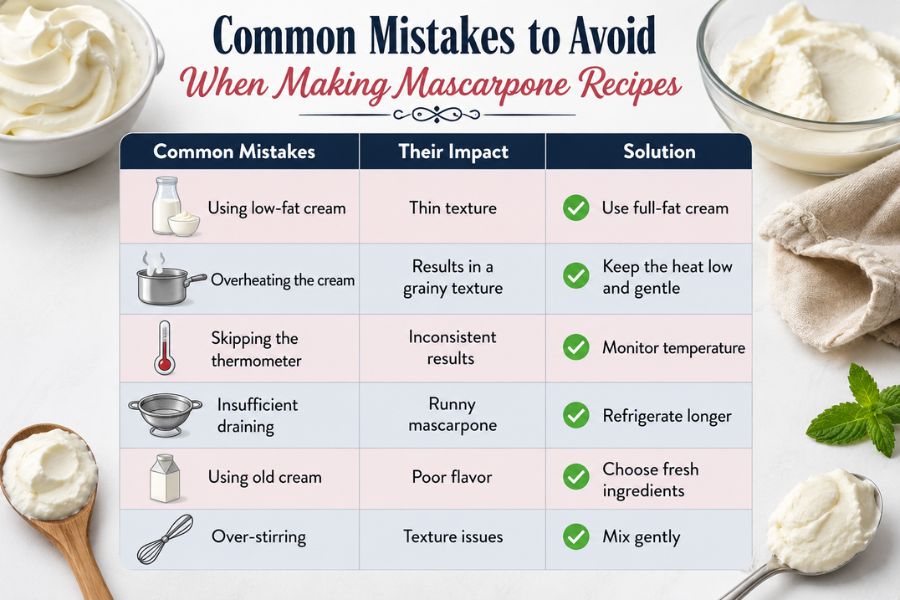
| Common Mistakes | Their Impact | Solution |
| Using low-fat cream | Thin texture | Use full-fat cream |
| Overheating the cream | Results in a grainy texture | Keep the heat low and gentle |
| Skipping the thermometer | Inconsistent results | Monitor temperature |
| Insufficient draining | Runny mascarpone | Refrigerate longer |
| Using old cream | Poor flavor | Choose fresh ingredients |
| Over-stirring | Texture issues | Mix gently |
Easy Mascarpone Recipes to Try
Afterward, once you’ve mastered how to make mascarpone recipes, you can experiment with these delicious options; furthermore, you can customize them to suit your taste.
| Recipe | Difficulty | Preparation Time |
| Mascarpone Fruit Parfait | Easy | 10 Minutes |
| Mascarpone Frosting | Easy | 15 Minutes |
| Mascarpone Pasta Sauce | Medium | 20 Minutes |
| Mascarpone Cheesecake Filling | Medium | 25 Minutes |
| Tiramisu Cream | Medium | 20 Minutes |
Mascarpone Fruit Parfait
For example, layer mascarpone with fresh berries, granola, and honey for a quick breakfast or dessert; additionally, drizzle extra honey on top for added sweetness.
Mascarpone Frosting
Similarly, whip mascarpone with powdered sugar and vanilla extract for a smooth cake frosting; moreover, it creates a rich and creamy texture.
Mascarpone Pasta Sauce
Likewise, combine mascarpone with garlic, parmesan, and herbs to create a creamy pasta sauce; furthermore, it adds richness and depth of flavor to the dish.
Mascarpone Cheesecake Filling
In addition, blend mascarpone with cream cheese, sugar, and vanilla for a luxurious cheesecake base; moreover, it enhances the smoothness and richness of the dessert.
Tiramisu Cream
For instance, mix mascarpone with whipped cream and sweeteners to create the signature filling used in traditional tiramisu; additionally, it provides a light yet creamy texture.
Storage and Shelf Life for Mascarpone Recipes
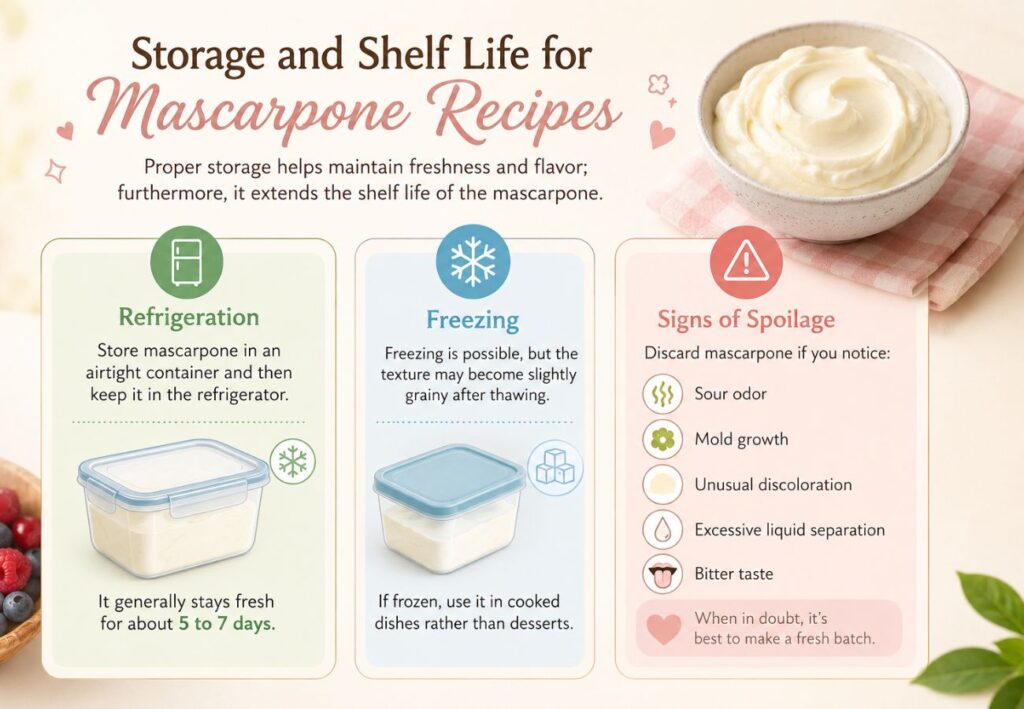
Therefore, proper storage helps maintain freshness and flavor; furthermore, it extends the shelf life of the mascarpone.
Refrigeration
First, store mascarpone in an airtight container and then keep it in the refrigerator.
It generally stays fresh for about 5 to 7 days.
Freezing
Although freezing is possible, the texture may become slightly grainy after thawing.
If frozen, use it in cooked dishes rather than desserts.
Signs of Spoilage
Discard mascarpone if you notice:
- Sour odor
- Mold growth
- Unusual discoloration
- Excessive liquid separation
- Bitter taste
When in doubt, it’s best to make a fresh batch.
Nutritional Information for Mascarpone Recipes
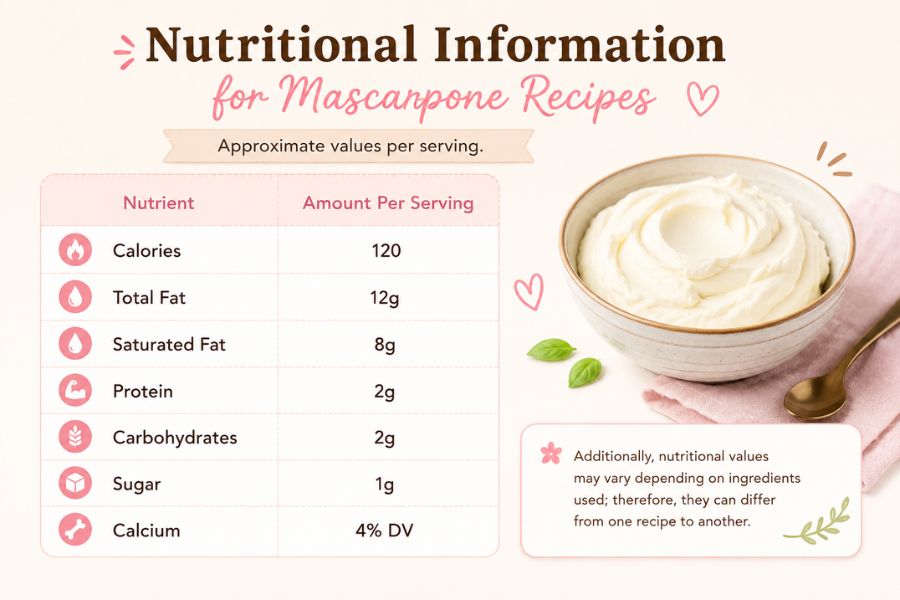
Approximate values per serving.
| Nutrient | Amount Per Serving |
| Calories | 120 |
| Total Fat | 12g |
| Saturated Fat | 8g |
| Protein | 2g |
| Carbohydrates | 2g |
| Sugar | 1g |
| Calcium | 4% DV |
Additionally, nutritional values may vary depending on ingredients used; therefore, they can differ from one recipe to another.
Frequently Asked Questions (FAQs)
Can I substitute cream cheese for mascarpone?
Yes, but the flavor and texture will be slightly different.
How long does homemade mascarpone last?
Generally, it usually remains fresh in the refrigerator for 5 to 7 days; however, proper storage is essential to maintain its quality.
Why is my mascarpone too runny?
Therefore, insufficient draining time is the most common cause; moreover, it often results in a softer and less stable texture.
Can mascarpone be used in savory dishes?
Indeed, it works wonderfully in pasta sauces, soups, and spreads; furthermore, it enhances both flavor and texture.Yes, it works wonderfully in pasta sauces, soups, and spreads.
Can I freeze homemade mascarpone?
Yes, though the texture may change slightly after thawing.
Final Thoughts
Learning how to make mascarpone recipes is a rewarding kitchen skill that allows you to enjoy fresh, creamy cheese whenever you need it. In fact, with only a few ingredients and simple techniques, you can create a homemade version; moreover, it rivals many store-bought options.
Once you’ve mastered the basic process, then don’t hesitate to explore different desserts, frostings, pasta sauces, and creative recipes; moreover, you can experiment freely with new flavors. In addition, homemade mascarpone opens the door to countless delicious possibilities; furthermore, it can elevate everyday meals with its rich, luxurious texture.