
From outdoor camping adventures and game-day gatherings, as well as busy weeknight dinners at home, this cooking style makes it easy to prepare delicious and filling meals with minimal effort. Moreover, it helps you save time while still enjoying satisfying meals. Enter the world of can cooker recipes .Furthermore, a Can Cooker simplifies meal preparation by combining the age-old concept of steam cooking with modern durability. As a result, it allows you to pack high-quality ingredients into a single pot and let the steam do all the heavy lifting.
For outdoor enthusiasts and busy home cooks alike, mastering can cooker recipes is not only a complete game-changer but also a highly convenient cooking solution. Moreover, it makes meal preparation faster and more enjoyable. It eliminates the need for multiple pots and pans, reduces fuel consumption on camp stoves, and ensures that your meats remain incredibly tender while vegetables retain their vibrant colors and essential nutrients.
Why Choose Can Cooker Recipes?
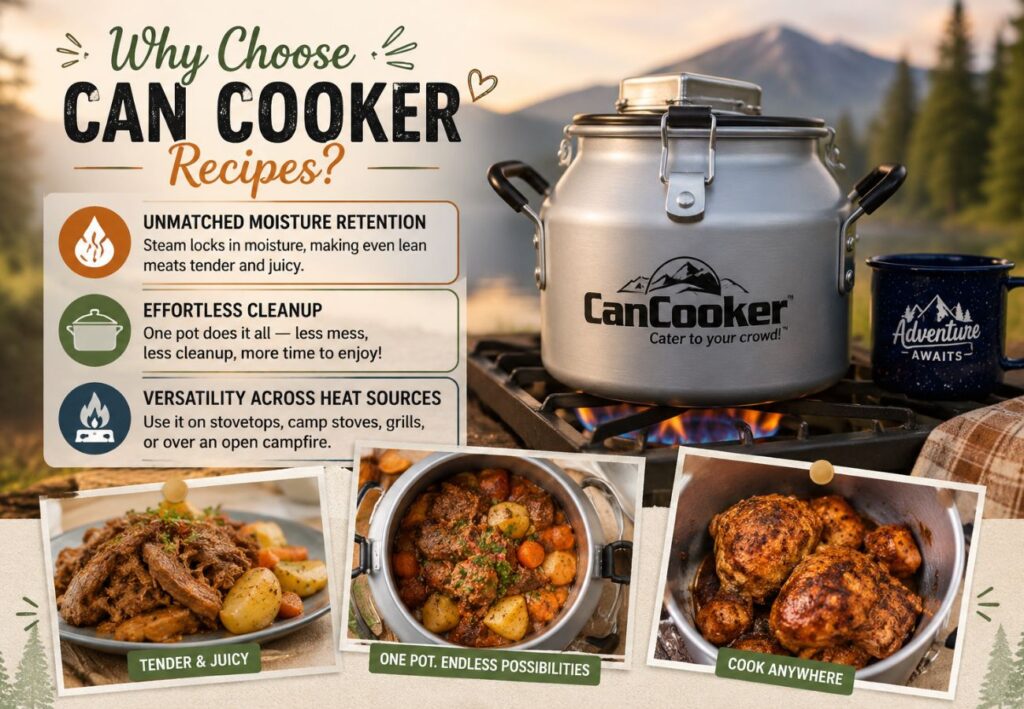
The secret behind the success of can cooker recipes lies not only in the physics of directional steam cooking but also in its efficient heat distribution. In addition, this method helps lock in flavor and moisture. In contrast, unlike traditional pots or open grills where moisture easily escapes into the air, a Can Cooker features a secure latching lid and a small vent hole. As the liquid at the bottom heats up, it creates high-pressure steam, and as a result, it circulates continuously inside the food chamber. Moreover, this process helps cook the food evenly and efficiently. Because heat is distributed more effectively, dishes can be cooked in less time compared to standard stovetop cooking.
- Unmatched Moisture Retention: Because the steam is locked inside, even leaner cuts of meat like chicken breast or beef chuck become exceptionally tender without drying out.
- Effortless Cleanup: Cooking everything in one specialized container means you only have one pot to wash at the end of the night—a massive benefit when fresh water is limited at a campsite.
- Versatility across Heat Sources:You can use a CanCooker over a multi-burner camp stove, or alternatively a standard kitchen stovetop (gas, electric, or induction). Moreover, it can also be used on a charcoal grill, and finally even directly over an open campfire using a campfire grate.
Top 3 Must-Try Can Cooker Recipes
1.Can Cooker Recipe: Classic Low Country Boil
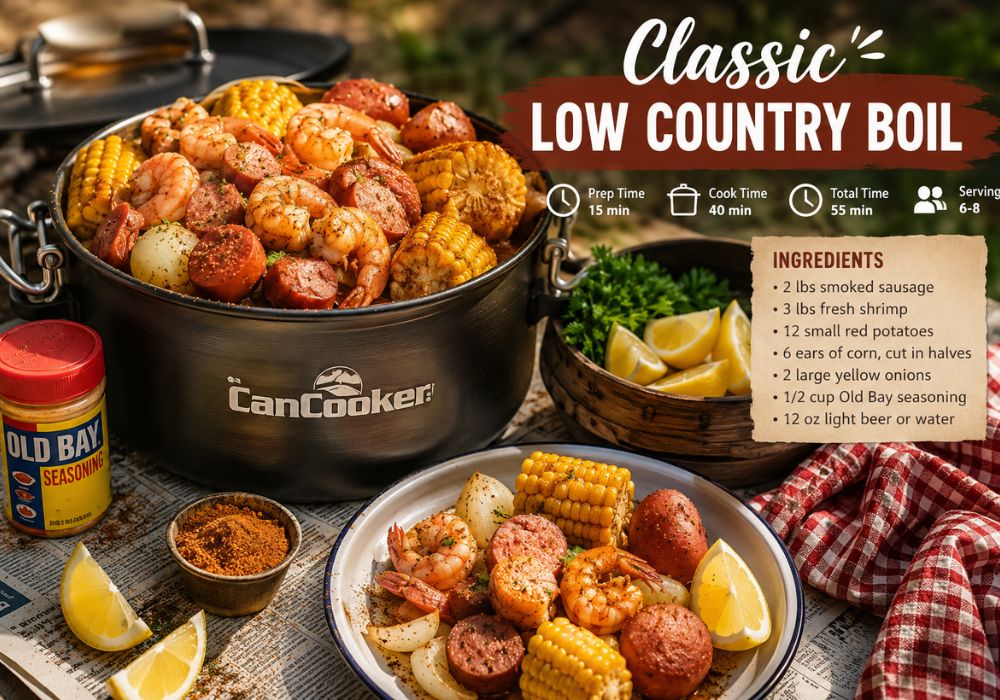
This traditional coastal favorite is arguably one of the most famous can cooker recipes ever created. In fact, it is widely loved for its rich flavor and simplicity. Moreover, it continues to be a popular choice among outdoor cooking enthusiasts. This traditional coastal favorite is arguably one of the most famous can cooker recipes ever created. In addition, it brings together fresh seafood, smoky sausage, and hearty root vegetables infused with bold seasonings, making it perfect for feeding a hungry crowd. Moreover, it delivers a rich and satisfying flavor experience.
- Prep Time: 15 minutes
- Cook Time: 40 minutes
- Total Time: 55 minutes
- Servings: 6-8
Ingredients:
- 2 pounds smoked sausage, chopped into evenly sized pieces for consistent cooking
- 3 lbs fresh shrimp (peeled and deveined)
- 12 small red potatoes (whole)
- 6 ears of corn, cut into halves
- 2 large yellow onions, quartered
- 1/2 cup Old Bay seasoning
- Pour in 12 ounces of light beer or water to generate steam and help cook the ingredients evenly.
Step-by-Step Instructions:
- Prepare the Base: Pour the 12 oz of beer or water into the bottom of the CanCooker and spray the interior walls with non-stick cooking spray.
- Layer the Dense Ingredients: Place the whole red potatoes and quartered yellow onions at the very bottom, as they require the most direct heat.
- Add the Mid-Layer: Place the corn halves and the smoked sausage chunks directly on top of the potatoes.
- Season Heavily: Sprinkle the Old Bay seasoning evenly over the vegetable and meat layers.
- Finally, place the fresh shrimp at the very top. Seafood cooks incredibly fast and only needs the gentle rise of the steam to cook perfectly without becoming rubbery.
- Secure and Cook: Latch the lid tightly.Place the cooker on the stove or other heat source and let it heat up over medium heat.
- Once you see a steady stream of steam escaping from the vent hole, reduce the heat slightly and let it cook for exactly 40 minutes.
- Serve: Carefully open the lid away from your face, drain any excess liquid, and dump the contents onto a newspaper-lined table for a classic feast.
Recipe 1: Nutritional Breakdown & Logistics
| Ingredient Component | Weight / Portion | Calories (Approx.) | Primary Nutrient Benefit | Layering Position |
| Red Potatoes & Onions | 12 pcs / 2 large | 1,100 kcal | Carbohydrates & Potassium | Bottom (Direct Heat) |
| Smoked Sausage & Corn | 2 lbs / 6 ears | 2,800 kcal | Protein, Fats, & Dietary Fiber | Middle (Moderate Heat) |
| Fresh Shrimp | 3 lbs | 1,400 kcal | Lean Protein & Iodine | Top (Steam Only) |
2. Can Cooker Recipe: Hearty Beef and Vegetable Stew
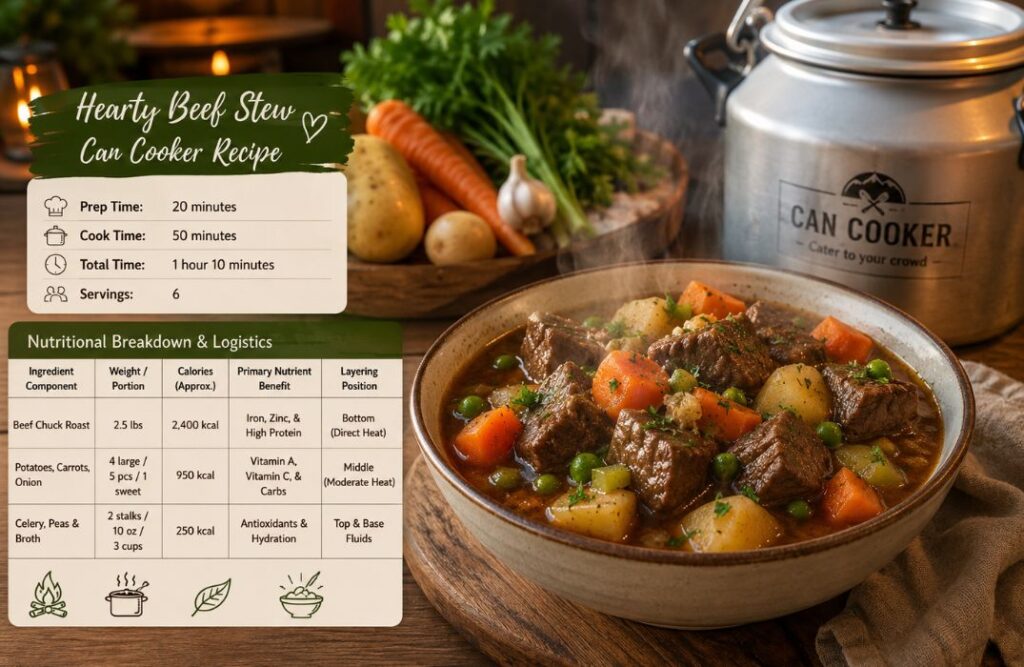
When the temperature starts to fall after sunset, a steaming bowl of beef stew can bring warmth and comfort to the table. Utilizing can cooker recipes for tough cuts of meat ensures a melt-in-your-mouth texture without hours of slow cooking.
- Prep Time: 20 minutes
- Cook Time: 50 minutes
- Total Time: 1 hour 10 minutes
- Servings: 6
Ingredients:
- 2.5 pounds beef chuck roast, cut into small, evenly sized chunks for even cooking
- 5 large carrots, cut into thick rounds
- 4 large russet potatoes, peeled and chopped
- 2 celery stalks, sliced
- 1 bag (10 oz) frozen peas
- 1 large sweet onion, chopped
- 3 cups beef broth
- 2 tbsp Worcestershire sauce
- 2 bay leaves
- Use salt, black pepper, and garlic powder as needed to bring out the flavors of the dish.
Step-by-Step Instructions:
- Liquid Base: Pour the beef broth and Worcestershire sauce into the cooker.
- Bottom Layer: Season the cubed beef chuck roast with salt, pepper, and garlic powder, then place it at the bottom of the pot.
- Root Vegetable Layer: additionaly, add the chopped russet potatoes, thick carrot rounds, and sweet onions over the beef.
- Green Vegetable Layer: Place the celery slices and bay leaves on top of the root vegetables. Keep the frozen peas aside for later.
- Steam Cycle: Lock the lid securely.Place the cooker on a stove burner or above a campfire grate so it can begin heating evenly. vvOnce steam begins escaping continuously from the vent hole, cook on medium heat for 45 minutes. After that, carefully vent the steam and open the lid. Then, stir in the frozen peas. Finally, close the lid for an additional 5 minutes using residual heat to warm the peas through.Remove bay leaves before serving.
Recipe 2: Nutritional Breakdown & Logistics
| Ingredient Component | Weight / Portion | Calories (Approx.) | Primary Nutrient Benefit | Layering Position |
| Beef Chuck Roast | 2.5 lbs | 2,400 kcal | Iron, Zinc, & High Protein | Bottom (Direct Heat) |
| Potatoes, Carrots, Onion | 4 large / 5 pcs / 1 sweet | 950 kcal | Vitamin A, Vitamin C, & Carbs | Middle (Moderate Heat) |
| Celery, Peas & Broth | 2 stalks / 10 oz / 3 cups | 250 kcal | Antioxidants & Hydration | Top & Base Fluids |
3. Best Can Cooker Recipes: Creamy Garlic Chicken with Potatoes
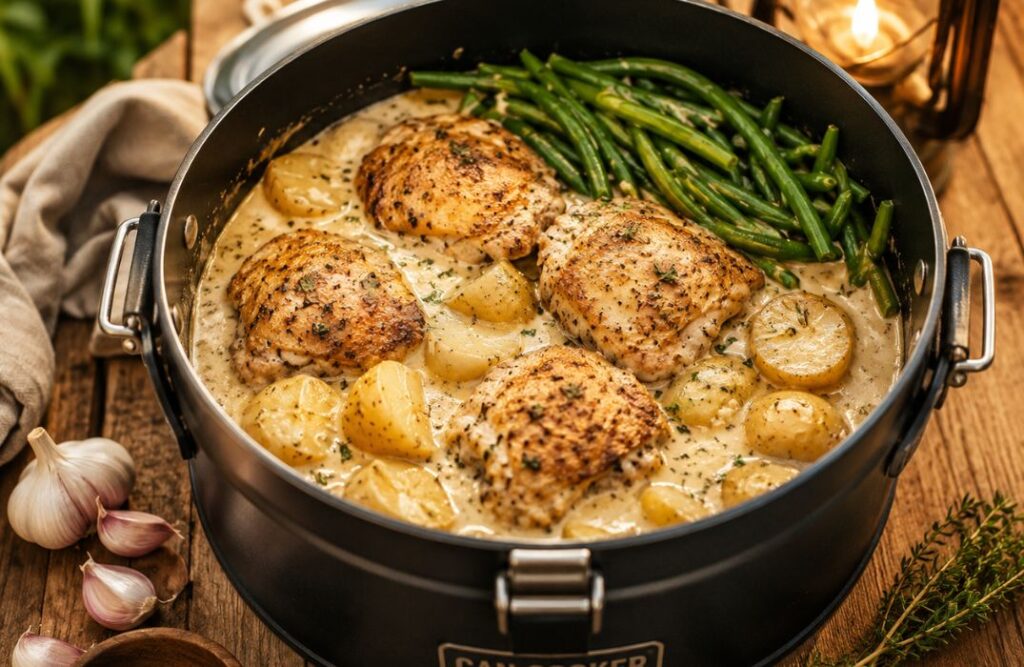
Firstly, this dish brings a gourmet touch to outdoor cooking. Moreover, the chicken infuses beautifully with garlic and herbs, while at the same time creating a rich sauce right inside the cooker. For another creamy ingredient idea, explore our mascarpone recipes for homemade dishes with a rich and smooth texture.
- Prep Time: 15 minutes
- Cook Time: 35 minutes
- Total Time: 50 minutes
- Servings: 4-5
Ingredients:
- 3 lbs chicken thighs (boneless, skinless)
- 1.5 lbs baby yellow potatoes, halved
- 1 lb fresh green beans, trimmed
- 8 cloves garlic, minced
- 1 cup heavy cream
- 1 cup chicken broth
- 1 tbsp Italian seasoning
- Salt and cracked black pepper to taste
Step-by-Step Instructions:
- Prepare the Sauce :In a separate bowl, firstly, whisk together the chicken broth, heavy cream, minced garlic, Italian seasoning, salt, and pepper. Then, pour this mixture into the bottom of the cooker. You can also learn more about using oregano-based ingredients in cooking with our guide to oil of oregano. Moreover, ensure it is evenly distributed for better flavor..
- First Layer: Firstly, place the halved baby yellow potatoes into the creamy liquid base. Moreover, make sure they are evenly spread for consistent cooking.
- Second Layer: Firstly, arrange the chicken thighs evenly over the potato layer. Moreover, ensure they are spaced properly for even cooking.
- Top Layer: Place the trimmed green beans on top so they retain their crisp-tender texture under the steam.
- Cook Process :Firstly, latch the lid tightly and place it over medium heat. Then, once steam begins to flow steadily out of the vent, let it cook undisturbed for 35 minutes. Moreover, avoid opening the lid during this time to maintain pressure and heat.Ensure the chicken internal temperature reaches 74°C before serving.
Recipe 3: Nutritional Breakdown & Logistics
| Ingredient Component | Weight / Portion | Calories (Approx.) | Primary Nutrient Benefit | Layering Position |
| Heavy Cream & Broth Base | 1 cup / 1 cup | 850 kcal | Fats & Calcium | Bottom Liquid Base |
| Baby Yellow Potatoes | 1.5 lbs | 600 kcal | Potassium & Vitamin B6 | Lower Mid-Layer |
| Chicken Thighs & Greens | 3 lbs / 1 lb | 1,950 kcal | Lean Protein, Iron, & Fiber | Top Mid & Upper Layer |
Pro Tips for Perfect Can Cooker Recipes
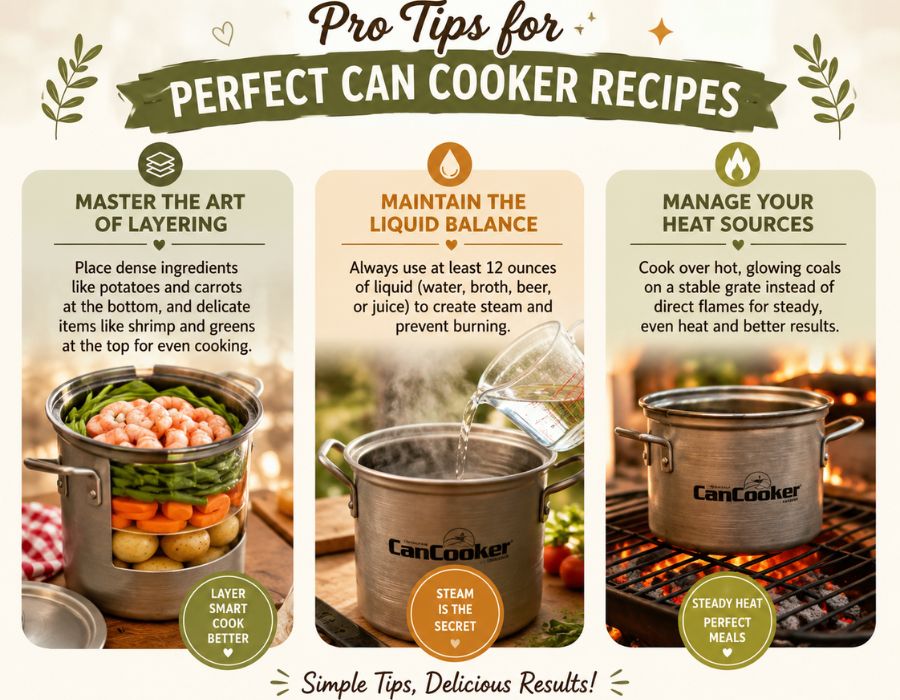
Master the Art of Layering
Because heat radiates directly from the bottom surface upward, proper ingredient placement determines whether your food turns out perfectly cooked or unevenly done. Always put your densest, hardest items (like potatoes, carrots, or tough meats) at the bottom.Meanwhile, delicate items such as shrimp, green vegetables, or leafy greens should stay at the top so they cook via gentle steam.
Maintain the Liquid Balance
Firstly, a Can Cooker requires a minimum amount of liquid. In fact, this is necessary to generate the high-volume steam needed for cooking. Moreover, without enough liquid, proper steaming will not occur. Therefore, never run the cooker dry. Always ensure you have at least 12 ounces of water, broth, beer, or juice at the bottom to prevent burning your ingredients.
Manage Your Heat Sources
If you are cooking over an open campfire, avoid placing the cooker directly into roaring, active flames. Instead, use a stable cooking grate placed over a bed of hot, glowing coals. Consequently, this provides a steady, manageable heat level that prevents the bottom layer of your food from scorching.
Conclusion
Furthermore, exploring different can cooker recipes opens up a world of simple, delicious, and incredibly efficient cooking possibilities.. Ultimately, by understanding the basics of ingredient layering, choosing high-quality components, and managing your heat source, you can easily create unforgettable meals anywhere from your home kitchen to a remote campsite .Firstly,, gather your ingredients, then pack your cooker properly, and finally enjoy the ultimate freedom of effortless cooking!
What is your favorite meal to cook outdoors? Have you tried any of these variations? Let us know in the comments section below!
Frequently Asked Questions (FAQs)
Q1: Can you use a Can Cooker safely on an indoor glass-top stove?
Firstly, yes, it works safely on all indoor glass-top, electric, and gas stovetops. Moreover, it should be used on medium heat for best results and safety
Q2: How much liquid is required to safely run a CanCooker without burning?
Firstly, you should always use a minimum of 12 ounces of liquid. Moreover, this is essential to maintain a proper steam cycle.
Q3: Is it necessary to brown the meat before putting it into the cooker?
No, searing is not required because the high-pressure steam thoroughly cooks and tenderizes meat.
Q4: How do you know when the food inside has finished cooking completely?
Start your kitchen timer the exact moment you see a steady stream of steam exiting the lid vent.
Q5: What is the easiest way to clean a CanCooker after cooking a sticky meal?
Use a high-quality non-stick cooking spray before layering ingredients to ensure an incredibly easy cleanup.